
Description
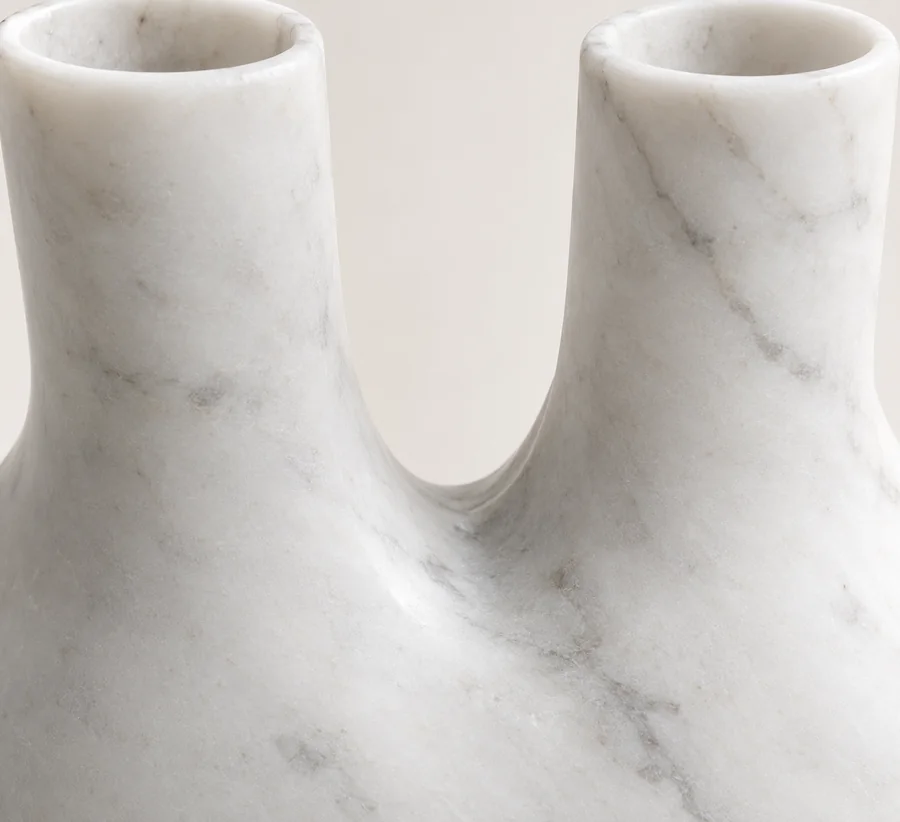
One rounded body dividing into two narrow necks
The double neck marble bud vase proposal develops two open mouths above a single rounded body. That split gives you two positions to consider when planning a dry-stem composition, with the stone form connecting them visually below. White marble is suggested for a custom piece, subject to material selection and quotation. The generated design does not establish whether the internal spaces connect, how the vase is constructed or whether it can hold water.
Plan the two stem positions together
Sketch the intended dry stems above both mouths and compare their combined height line. Similar lengths can create one relationship, while different heights may make the divided outline more apparent. Include the expected spread and normal viewing direction in your brief. The two illustrated openings do not establish a fixed stem count or capacity. Have the actual mouth and usable depth of each neck confirmed, and avoid forcing a bundle into either opening.
Consider how the split appears from the room
From one angle, the two necks may be clearly separated; another view may allow one to partly obscure the other. Decide which orientation you prefer for the shelf or console and show it in a room photograph. Ask for measured front and side elevations so the body and divided upper form can be judged together. A plain area behind the piece can help you assess the outline, especially once the intended stems are added to the sketch.
Record outside size and usable dimensions separately
The suggested overall format is approximately 20 × 12 × 25 cm. These are planning dimensions for a custom proposal rather than measurements taken from finished stock. Ask the maker to show the rounded body, both mouths, base and relevant internal dimensions on the final specification. The overall width does not establish the distance between openings, and the external height does not establish stem insertion depth. Any size change should be reviewed across the complete divided form before manufacture.
Check the intended supporting surface and the clearance needed by the complete stem arrangement. If the vase will sit among other accessories, include their actual measurements rather than relying on the generated setting. Confirm the finished contact area and select a suitable level surface. Ask which removable pad or liner is appropriate for the furniture finish, with any supplied protection identified in the quotation instead of assumed from the illustration.
Examine the junction between the necks
The split is a useful detail to discuss when refining the shape. Request a close drawing showing the transition from the rounded body into the two necks and the intended edge treatment around each mouth. The maker should review the construction for the actual marble and final measurements. Do not infer a particular joint method, one-piece carving or continuous grain from the rendering. Keep the approved junction detail with the overall elevation if the neck spacing or proportions change.
Choose marble across the rounded and divided surfaces
Compare representative white-marble references with the proposed stems, wall colour and furniture. Natural markings may appear differently across the broad body and the narrower upper forms. Discuss whether restrained veins or a stronger pattern suits the design, subject to the available material. Confirm the finish and acceptable variation in the quotation. The illustrated white surface does not identify the exact block, polished appearance or grain relationship of a commissioned piece.
Confirm inner-vessel arrangements before adding water
Watertightness is not established for this design. Use dry stems unless the maker supplies and approves suitable inner vessels for your intended fresh flowers. Both openings need a fit and access review, and the internal arrangement must be confirmed rather than assumed to contain separate or connected chambers. Do not pour water directly into the stone on the strength of the image. Keep the base dry and follow the agreed instructions for protecting the display surface.
Request a defined two-neck commission
Share the preferred orientation, two-part stem plan and measured display location through a double-neck bud-vase request. Confirm the selected marble, final outside and usable dimensions, finish, expressly included components, price, production timing and delivery arrangements. Images are AI-generated design illustrations rather than photographs of available stock or tested vases. Obtain handling advice for the completed body and necks. The Natural Stone Institute care reference provides general material guidance alongside the maker’s specific cleaning instructions.
Compare several openings with a single central neck
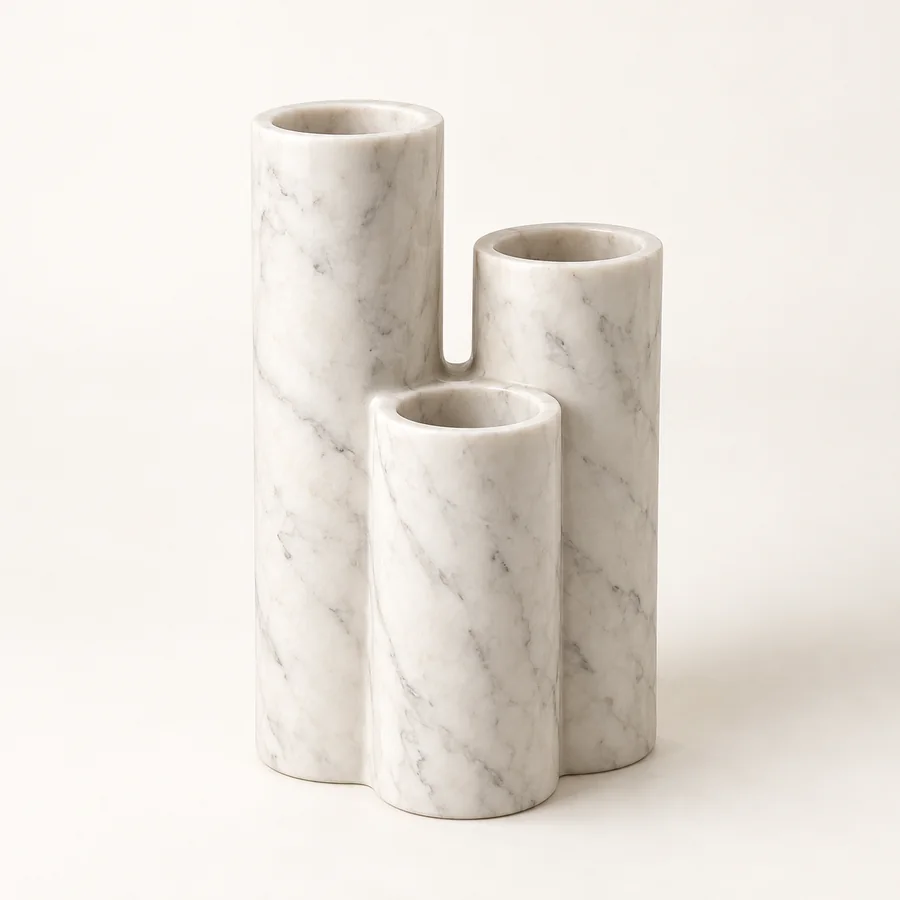
The three-tube marble bud vase creates a staggered sequence of openings. The low-disc bud vase uses one tiny neck above a flattened circle. Compare their measured capacities and outlines with the double-neck form before deciding how to arrange your dry stems.


Reviews
There are no reviews yet.