
Description
A whale silhouette with a lifted tail
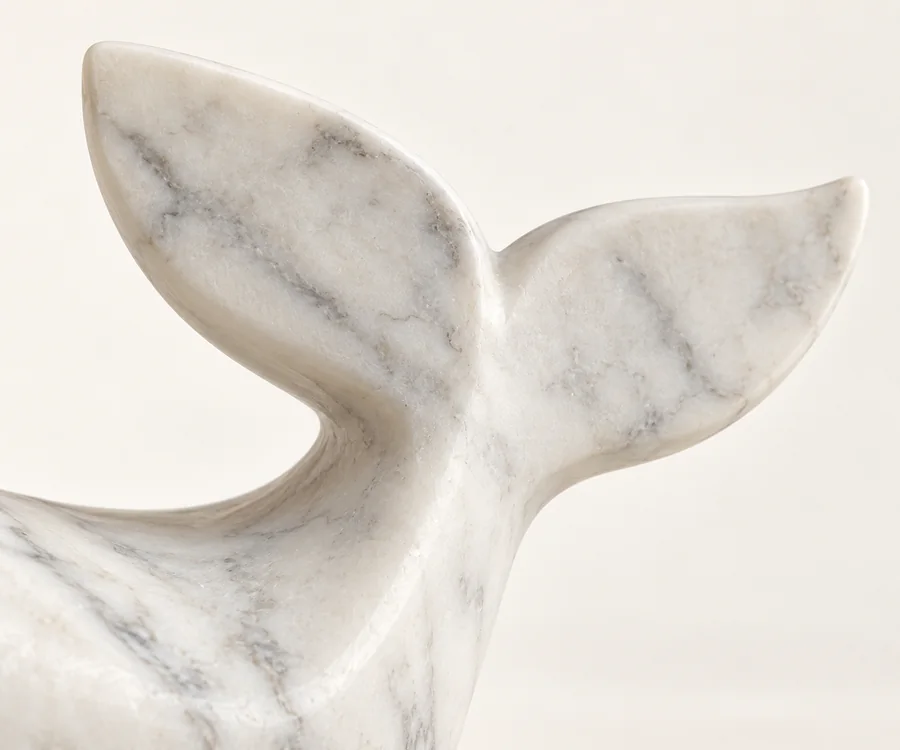
A broad body, flat underside and raised forked tail define this marble whale figurine. The proposed shape is deliberately simple, using the contrast between the long body and the upward tail to suggest an ocean subject in stone.
Work with the horizontal outline
The whale can be planned as a low accent below framed art or beside a taller object on a console. Leave the forked tail visible against a quiet background. Shelf length is particularly relevant here: check the whole nose-to-tail span, rather than choosing the sculpture by height alone.
Suggested planning dimensions are approximately 32 × 14 × 16 cm, subject to a final measured specification. This is a custom design enquiry, with white marble proposed and the natural grain and finish still to be selected. The underside and tail thickness should be confirmed for the size you commission.
Choose the scale for your coastal display
Tell RS Marble Craft the available shelf length and whether the whale will be viewed from the front, side or above. Include your delivery postcode when requesting a whale figurine quote. Support the body when moving a completed piece; the raised tail is a carved detail, not a lifting point. Dust its fork gently with a soft cloth.
The whale shown is an AI-generated design illustration. It represents a proposal for discussion, with final stone, dimensions, price and delivery arrangements confirmed before an order begins.
Give a horizontal sculpture a deliberate place
The whale is suited to a display where length contributes more than height. Before commissioning it, identify the full clear run of the shelf and the point from which the nose-to-tail outline will normally be seen. A low piece can disappear behind a tray or pile of books even when there is technically enough room. Mark the proposed length and depth with paper, then look at the arrangement from a seated position. Leave a quiet area around the raised tail so its fork remains distinct.
Balance the broad body and the lifted tail
The body provides the main mass of the whale, while the tail supplies its change of direction. That relationship should remain convincing at the final size. If you want the sculpture shorter, taller or more rounded than the proposal, discuss the whole outline rather than altering one measurement in isolation. Ask the maker to review the transition from body to tail and confirm how thick the forked detail will be. The shape needs to be resolved for the selected stone, not copied from a rendering without review.
Think about the underside as well as the silhouette
A flat-looking underside in an illustration does not establish the finished contact area. Confirm how the completed whale will meet the furniture and whether any separate protection is recommended for that surface. For a floating shelf, obtain the shelf’s load information and the actual sculpture weight before deciding on placement. Keep enough depth for the body to sit fully supported. The whale should not bridge a gap between supports or rely on its tail touching another object to remain in the intended position.
A coastal reference without a crowded theme
The whale can introduce an ocean subject to a room through shape alone. A pale stone form against timber, woven texture or a darker background may be enough to establish the connection. Avoid surrounding it with so many small sea-themed objects that the broad outline becomes difficult to see. If the shelf already holds a tall vase or framed print, try positioning the whale beneath the main sight line rather than directly in front of it. Use the difference in height to make a readable group.
Approve the stone along the length
Natural veining can run across or along the body, producing a different impression in each case. Ask for material options if that direction matters to the room. The finish also affects the broad curved surface: strong reflections can emphasise the shape, while a softer appearance may feel quieter beside books. These preferences should be agreed with the maker, alongside any limitations of the selected marble. A white illustration cannot show the exact grain, tonal variation or surface response of the eventual piece.
Plan an uncomplicated arrival
Record the final overall dimensions, stone and finish in the quotation, then confirm making time and delivery arrangements. A gift order should include the recipient’s display space and required date early in the discussion. When the completed whale is moved, support the broad body with both hands as advised, keeping the raised fork clear. For cleaning, use gentle cloths and suitable neutral stone care rather than abrasive pads or acidic household sprays. Leave access behind the sculpture so routine dusting does not require repeated repositioning.
Compare the shapes before choosing
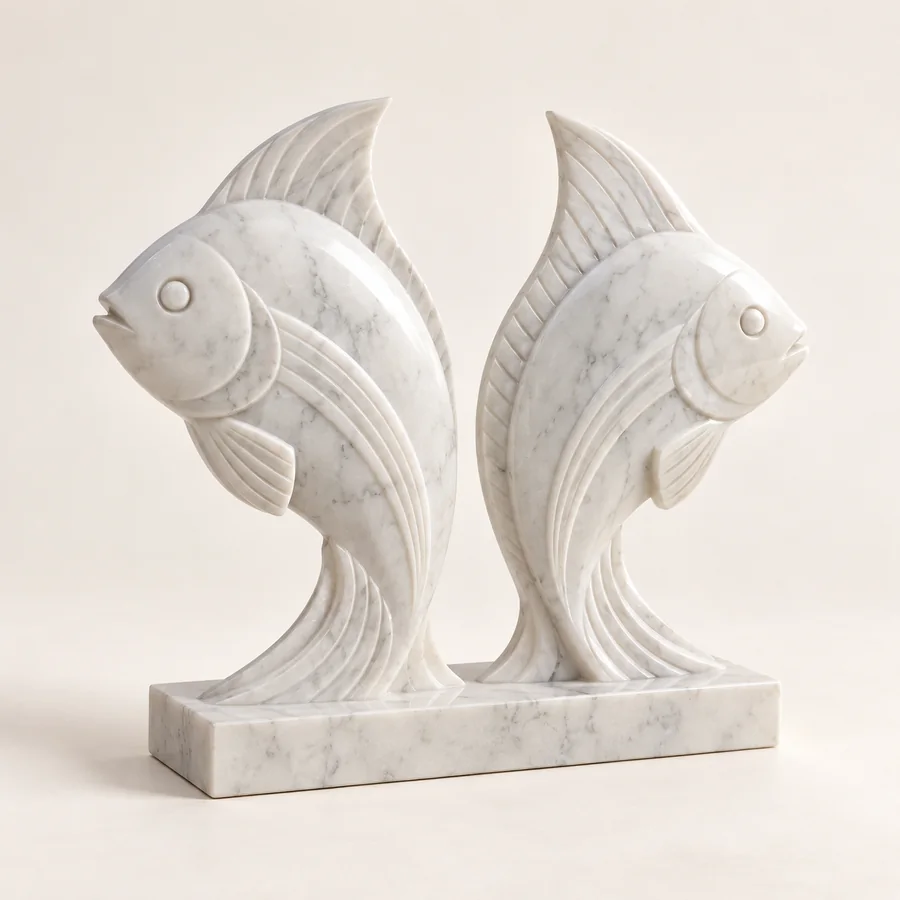
The rounded seal figurine and the upright twin-fish sculpture offer different proportions to compare with this design. Select the silhouette that fits your display rather than matching every object in the room.
For maintenance information relevant to the selected whale material, read LATICRETE stone cleaning guidance; follow the maker’s additional instructions for the approved surface.
Reviews
There are no reviews yet.