
Description
An alert seated cat with a wrapped tail
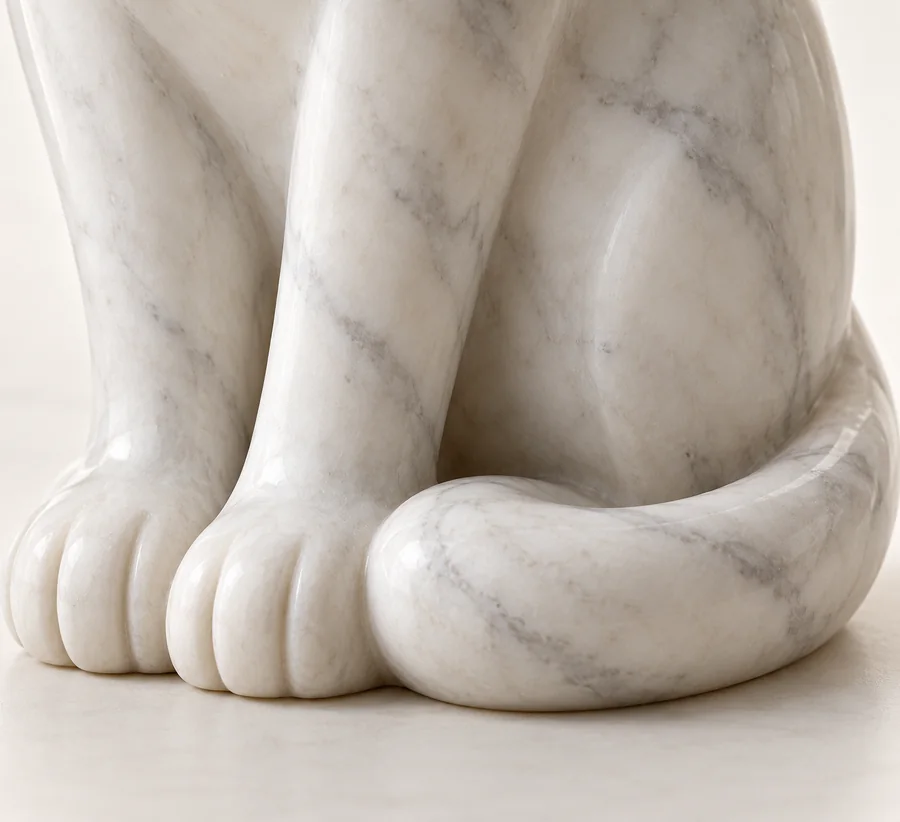
The seated marble cat statue is proposed with upright ears and a tail drawn around its feet. Its vertical posture gives it an attentive character, distinct from a curled sleeping cat, and makes the line from the ears to the front paws central to the composition.
Choose a position for the upright pose
Consider a display shelf or console where the cat’s face and wrapped tail can be seen together. Leave space above the ears and in front of the feet. An angled placement can show how the tail joins the body without losing the upright outline.
Suggested planning dimensions are approximately 20 × 12 × 25 cm. These figures are a basis for a custom enquiry, not a stocked-item measurement. White marble is the proposed material, with its final shade, grain and surface finish confirmed before manufacture.
Commission your seated cat
Include the available display height and any reference preferences in a seated cat sculpture enquiry. RS Marble Craft can review the head, ear and tail proportions at the scale you want. Lift the finished figure beneath the body; the ears and wrapped tail should stay free of strain.
This listing uses AI-generated illustrations of a proposed cat design. A completed statue, production timeline and delivery cost are established only after the final specification is quoted.
Use the upright outline to choose the display height
The seated cat has an attentive posture, with the ears, chest and front paws forming a clear vertical line. Choose a surface where that line can be seen without the ears disappearing into an upper shelf or the paws being hidden by a tray. A paper outline at the proposed size can help test the available height. View it from the doorway and a normal seated position. A slight angle may reveal the wrapped tail more clearly, while a direct front view gives the face a stronger presence.
Decide how the tail should meet the feet
The tail drawn around the paws is a key feature of this design. Discuss its height, curve and relationship to the body when reviewing the final size. A more prominent tail can change the footprint, while a very shallow interpretation may be less visible from across a room. Ask the maker to consider those choices together with the underside and contact area. The illustration provides a visual proposal; the agreed stonework specification should establish how the tail, feet and body will actually be resolved.
Make the expression personal without assuming a portrait
A small change to the head angle or ear spacing can make an upright cat appear curious, calm or formal. Identify the mood you prefer before requesting fine facial details. If you want the statue to recall a particular pet, supply suitable reference photographs and ask what changes are feasible at the chosen scale. The proposed general cat design does not include a guaranteed likeness. Any personalisation, revised carving or accent finish should be described clearly in the quotation so the maker and buyer share the same expectations.
Plan the cat within an existing arrangement
A seated figure can bring height to a group containing a low bowl, horizontal book stack or resting animal. Keep the surrounding objects from crossing the tail and face. On a console used for keys or daily paperwork, reserve a separate working area so the cat does not need to be moved repeatedly. In a display cabinet, check the usable depth and the effect of the glass doors on the view. The finished sculpture should suit the room’s ordinary use as well as the appearance of the arrangement.
Review pale stone around the face
Natural grain may be visible across the chest, head or tail, and each location changes how the carving is perceived. Ask for information about the selected marble if a quieter facial area is important. The final finish should also be agreed before manufacture, including how the ears and shallow tail contours will be treated. An illustrated white surface is not a guarantee of uniform colour or an exact vein pattern. If the cat is coordinating with another stone object, compare the actual material direction rather than expecting an identical match.
Keep ordering details together
Provide the clear shelf height, usable depth and preferred dimensions with the delivery postcode. Confirm the finished weight, any separate support and the expected making schedule before arranging a gift date. Move the completed cat by supporting its main body, keeping strain away from the ears and tail. For cleaning, use a soft cloth and compatible neutral stone care without acidic sprays or abrasive pads. Retain the approved seated pose, expression and base details with the quotation so future handling or care enquiries can refer to the actual commission.
Compare the shapes before choosing
The low sleeping-cat design and the seated floppy-eared dog offer different proportions to compare with this design. Select the silhouette that fits your display rather than matching every object in the room.
For further material-care reading after the seated cat has been specified, consult Daltile natural stone care guidance; follow the maker’s additional instructions for the approved surface.


Reviews
There are no reviews yet.