
Description
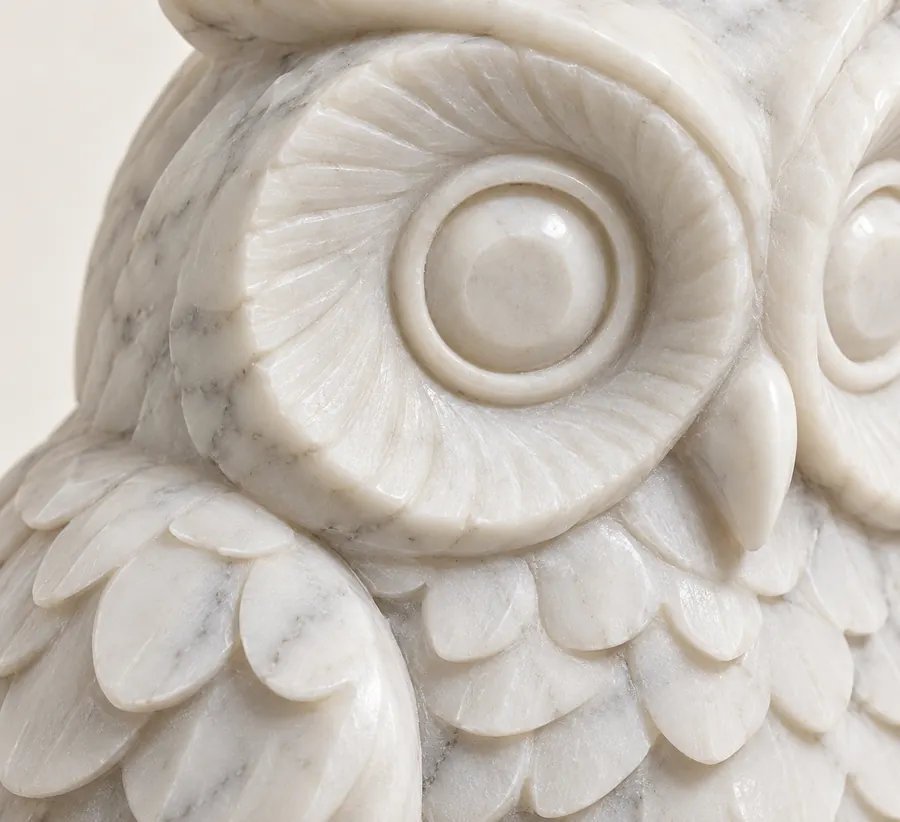
An owl with round eyes and layered wings
The marble owl figurine centres on two large round eyes above layered wing feathers. Its compact upright shape can be considered for a study, reading corner or display shelf where the face can be seen at close range.
Let the feather carving catch the light
A position with gentle light from the side can help reveal the proposed layers along the wings. Keep the front of the owl unobstructed so the circular eyes remain visible. If it will sit among books, allow enough space that the bird is seen as an individual object rather than hidden between spines.
The suggested dimensions are approximately 16 × 14 × 24 cm. They are planning figures for a custom order, not a ready-stock specification. White marble is the initial proposal, and the chosen grain, finish and depth of feather detail should be confirmed before production.
Choose the level of owl detail
Tell RS Marble Craft whether the owl will usually be seen nearby or across the room when requesting your owl figurine quote. That context helps settle the scale of the eyes and wing layers. Use a soft cloth around the carved feathers on the finished piece, keeping abrasive cleaners away from the edges.
The owl images are AI-generated illustrations of a proposed design. Final material, measurements, price and delivery timing remain subject to the agreed quotation.
Start with the owl’s face at viewing height
The large circular eyes are intended to be the first feature you notice. Choose a shelf position where they can be seen naturally from the reading chair or desk, rather than placing the bird so high that only its underside is visible. If it will sit among books, reserve a clear area in front of the face. Measure the opening and compare it with a paper outline of the proposed owl. A little breathing room above the head helps the compact upright form remain distinct from the surrounding book spines.
Choose feather detail that fits the scale
The layered wings offer a different texture from the rounded face. Decide whether you want those layers to be a prominent part of the design or a quieter supporting detail. A figurine viewed closely can carry a different level of definition from one seen across a room. Discuss the depth and spacing of the feather cuts after the final size is chosen. Fine lines shown by digital shading are not a confirmed stone-carving specification, so identify the details that matter most before the maker develops the finished approach.
Use light to reveal the wing layers
Try the planned position with light arriving from one side and then view it under normal evening lighting. Side light may show the changes of plane more clearly, while a strong light directly in front can make the surface appear flatter. Avoid placing the owl where it must be moved each time a reading lamp is adjusted. A stable arrangement with a clear face and an accessible back is easier to enjoy than one that depends on very precise lighting or frequent repositioning.
A study accent that suits how the room is used
On a working desk, reserve separate areas for papers, drinks and items that are moved throughout the day. A dedicated shelf or side console may give the owl a clearer place than the busiest part of the desktop. For a reading corner, compare the figurine with the scale of the chair, lamp and nearby books rather than selecting it in isolation. The proposed design can introduce a bird subject without turning every accessory into the same theme. Differences in height and texture can make the group more readable.
Approve the marble around the eyes and wings
Ask how natural grain will be considered across the broad face and the layered sides. A strong vein might become a visible part of one eye or wing, so discuss material preferences before carving. The selected finish should also be agreed: surface reflection can change how clearly the round eyes and feather layers are perceived. If you are matching an existing pale stone accessory, share a photograph while recognising that separate stones can vary. The white digital illustration cannot establish an exact shade or identical pattern for the final owl.
Ordering and caring for the completed bird
Provide the display height, available shelf depth and preferred overall size when requesting a quotation. Confirm the actual base contact area, completed weight and any separate protective support. During cleaning, do not force a stiff brush into the layered wings; use a soft cloth and suitable neutral stone care without acids or abrasive pads. Ask for advice if dust collects in a detail that is difficult to reach. Keep the approved eye treatment, feather definition and finish notes with the order so the commissioned design remains clear.
Compare the shapes before choosing
The profile-led kingfisher and the tall-eared rabbit ornament offer different proportions to compare with this design. Select the silhouette that fits your display rather than matching every object in the room.
The external guide to consult when discussing care for the owl is Marazzi stone maintenance reference; follow the maker’s additional instructions for the approved surface.


Reviews
There are no reviews yet.