
Description
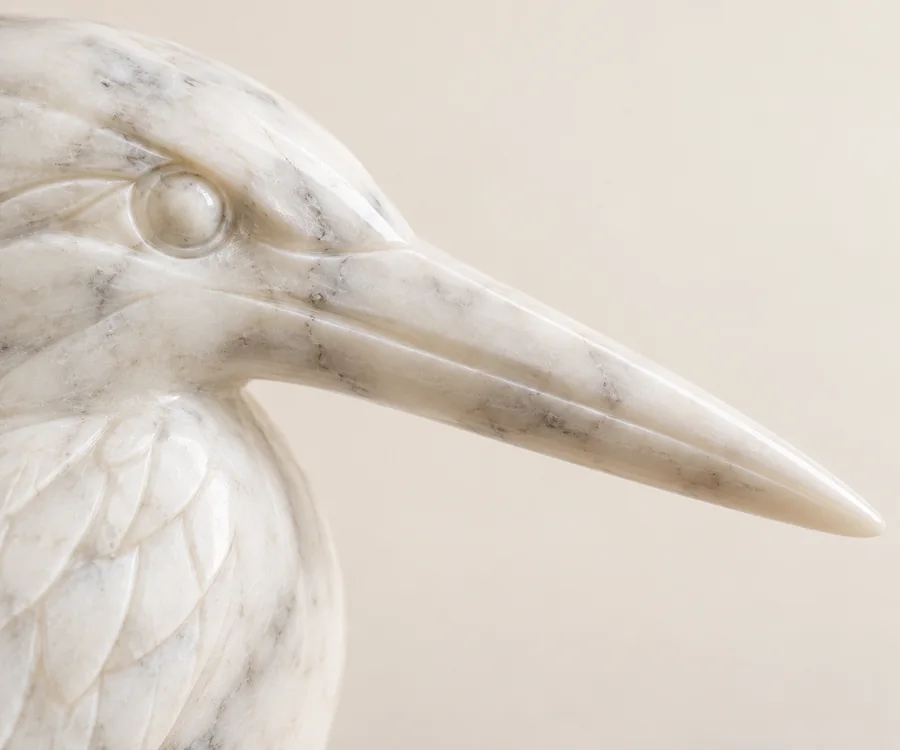
A kingfisher profile defined by its beak
The marble kingfisher figurine is a compact upright bird design with a long, straight beak and a plain low foot. Its identity comes from the profile rather than a coloured surface, making the proportion of the beak to the body central to the proposed carving.
Choose a view that shows the profile
Set aside a display position with space in front of the beak. An angled or side view will reveal the kingfisher silhouette more clearly than a head-on position. Avoid a tight shelf opening where books or other accessories could press against the extended detail.
The suggested planning size is approximately 16 × 10 × 20 cm. This is a starting point for a custom commission, with white marble proposed and final measurements still to be agreed. Confirm beak thickness, the supporting foot and the finish before approving the stonework.
A bird-focused custom enquiry
Share the intended shelf height and your preferred viewing angle in a kingfisher sculpture enquiry. RS Marble Craft can assess how the long beak should be handled at the chosen scale and quote for the final design. Support the body when carrying a completed figurine; the beak must remain free of pressure during handling and cleaning.
The kingfisher is shown as an AI-generated illustration, not a photograph of an existing item. The actual stone, order price, packing method and lead time are confirmed separately.
Plan for the beak’s horizontal reach
The long straight beak is the defining detail of this kingfisher proposal. Measure the available space in front of the bird as well as its height, because a shelf can accommodate the body while leaving the beak too close to another object. Choose a position away from books that are frequently removed or a cabinet door that swings past the display. A small paper side profile is useful for checking that reach before agreeing the dimensions. The entire outline should remain within a clear, protected area of the arrangement.
Decide how recognisable the profile should be
The concept identifies the bird through proportions rather than bright colouring. The beak-to-body relationship, head angle and short supporting foot are therefore important decisions. If you prefer a more naturalistic or more simplified interpretation, say which features you want the viewer to notice. Ask for those choices to be reviewed at the final size. Increasing detail does not automatically improve a small carving; a clear head and beak outline may communicate more than several tiny surface marks that disappear at the normal viewing distance.
Give a small bird a clear background
A plain section of wall, a dark shelf back or a gap between books can separate the kingfisher’s pale silhouette. Avoid pushing it into a tightly filled display where only the long beak remains visible. A position slightly angled to the viewer can show the profile while retaining a sense of the body’s depth. Check the appearance in ordinary daylight and after the room lights are on. The goal is a readable bird shape in the actual setting, rather than an arrangement that works only for a close photograph.
Check the support and furniture together
The proposed low foot is visually discreet, but its finished dimensions and contact area need confirmation. Ask how the chosen stance will be supported and whether any separate base is recommended. If the figurine will sit on glass or a floating shelf, obtain the final weight and check the surface’s suitability before placing it. Protective pads, stands or fittings should be selected around the completed support rather than assumed from the illustration. Leave sufficient room for gentle cleaning without having to slide the bird across the furniture.
Material choices for a compact carving
Natural veins can have a strong presence on a small body and an extended beak. Discuss whether you prefer subtle grain or a more visible stone pattern, and ask to review the actual material selection. Confirm how the surface will be finished around the head, body and foot. If the bird is meant to coordinate with an existing sculpture, send a reference photograph while allowing for differences between individual pieces of marble. The proposal does not identify a particular quarry, uniform shade or preselected slab.
A clear brief for a bird lover’s commission
Include the preferred dimensions, main viewing angle and delivery destination in one enquiry. If the piece is a gift, explain the recipient’s display space and required date rather than choosing a size solely from the image. Ask how the beak will be protected in transit and follow the supplied unpacking guidance. For routine care, keep pressure off the extended detail and use soft cloths with appropriate neutral stone cleaning. Store the agreed profile and final measurements with the quotation so later questions refer to the actual commissioned kingfisher.
Compare the shapes before choosing
The long-tailed perched parrot and the open-wing butterfly display offer different proportions to compare with this design. Select the silhouette that fits your display rather than matching every object in the room.
For a cleaning reference alongside the kingfisher handling instructions, read Daltile natural stone care guidance; follow the maker’s additional instructions for the approved surface.
Reviews
There are no reviews yet.