
Description
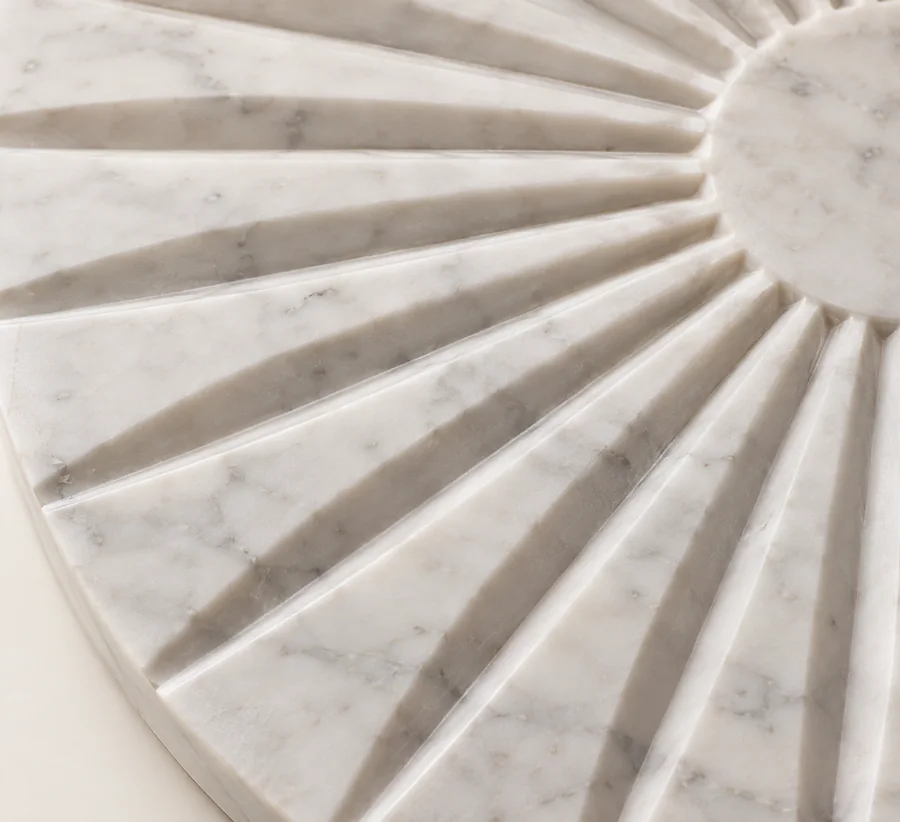
Deep radiating rays around a circular centre
The carved sunburst marble wall art proposal uses depth to create its radial pattern. Rays spread across a circular stone disc, making the surface relief central to the design instead of using alternating coloured inlays.
Plan the full circle and its projection
Approximately 40 × 40 × 3 cm is the suggested planning format. Confirm the finished diameter, stone thickness and maximum carving depth with the maker. Consider the viewing distance and surrounding wall space so the ray pattern can be seen as a complete circle.
White marble is selected by quotation. The disc’s final weight, backing and suitable mechanical fixing require specialist review against the actual wall. The illustration provides no structural rating or assumed ordinary picture-hook support.
Include the intended mounting area through the carved-sunburst enquiry. Agree the final finish, included fixing provisions, price and production timing before making. Images are AI-generated design concepts rather than photographs of an installed stone disc.
A radial pattern made through carving
The sunburst spreads from a circular centre toward the perimeter, giving the disc a clearly focused composition. Unlike a coloured inlay arrangement, the proposed pattern depends on the carved rays and the selected stone surface. Consider it as a complete circle from the room’s normal approach before concentrating on the close-up grooves. A paper outline can help you judge the intended diameter beside furniture or neighbouring artwork, including the amount of clear wall space you want around the disc.
Review the rays from centre to edge
Ask for a face drawing showing the centre, full ray arrangement and outer margin at the final size. The relationship between narrow inner areas and wider outer sections contributes to the visual effect. If the diameter changes, have the ray proportions reviewed rather than assuming the pattern will read equally at every scale. The maker should confirm the actual stone thickness, carving depth and maximum projection separately from the planning dimensions. Keep those details together before the final design is approved for manufacture.
Choose the disc’s visual centre in the room
A radial composition makes its centre especially noticeable, so compare that point with the surrounding furniture and wall arrangement. Include nearby objects in the measured elevation instead of automatically placing the disc at the centre of the whole wall. If several artworks are grouped together, review their outlines and gaps as one composition. This visual brief can identify the intended position while the competent installer separately assesses the actual backing and support required for the selected stone and finished weight.
Consider light across the deeper grooves
Look at the intended location under ordinary daylight and evening lighting. The rays can create a different pattern of shadows as the light direction changes, so describe the setting to the maker. If separate feature lighting is planned, include that information in the design discussion. A representative carving or finish reference, where available, is useful for agreeing the desired appearance. The generated highlights suggest a possible relief effect rather than guaranteeing the same installed shadows or specifying the exact depth of the commissioned grooves.
Select white marble for a patterned surface
Natural veins may cross several rays and alter the visual emphasis around the centre. Compare representative material references with the wall and any proposed surround, and agree how much variation you prefer. A quieter selection may emphasise the radial carving; stronger markings may add another pattern to the disc. Ask the maker to confirm the material, edge treatment and finish. White marble wall art should follow the actual approved selection and natural variation rather than an expectation that the generated white surface will be reproduced exactly.
Keep the circular face and mounting specification aligned
Give the approved wall layout to the competent installer reviewing the complete backing and support arrangement, and have the maker record the agreed provisions before manufacture. Confirm the supplied components and installation scope in the order. Request packing and handling guidance for the perimeter and ray edges, then inspect the disc before fitting. Retain the face drawing, material details and care information for future maintenance. If the disc is later moved or reframed, review the new arrangement against the actual installation specification rather than relying on the original decorative image.
Explore a related design direction
the lotus medallion plaque offers another centred circular subject. the amber-and-blue inlay sunburst disc uses proposed coloured rays instead of this carved pattern. Compare the different surface treatments and approved material choices before selecting the wall composition.
The carved rays, centre and perimeter require care suited to the selected marble and finish. The Marazzi stone maintenance reference offers general guidance to discuss alongside the care instructions for the commissioned piece.

Reviews
There are no reviews yet.