
Description
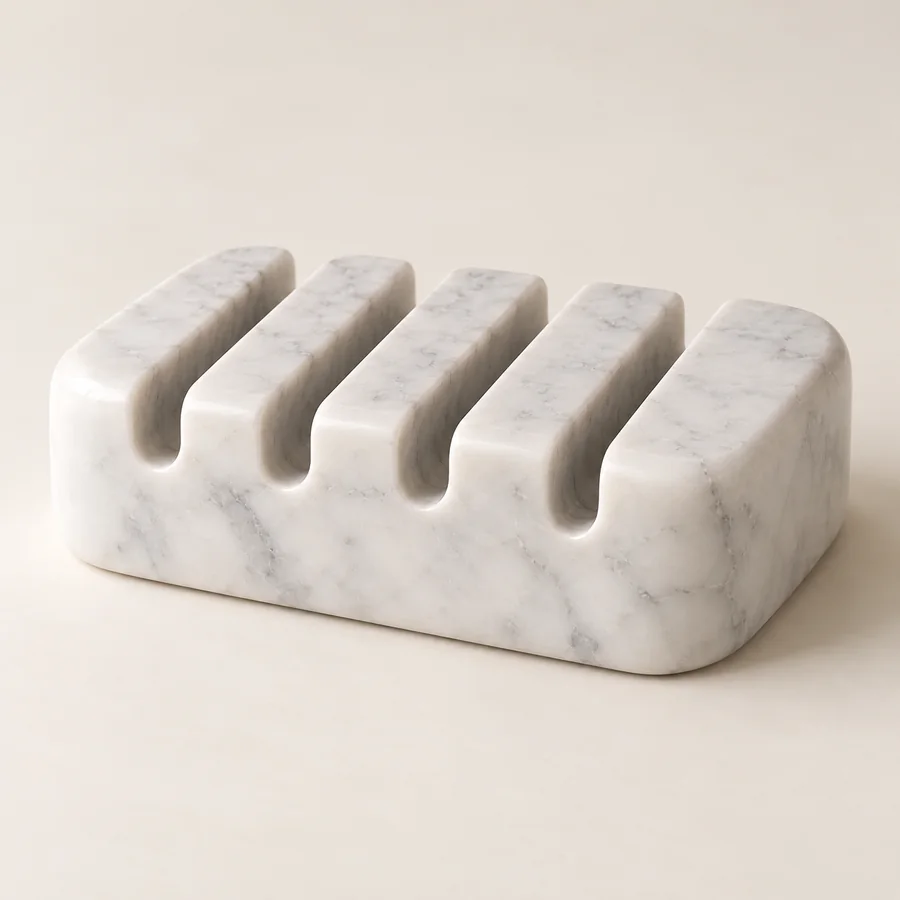
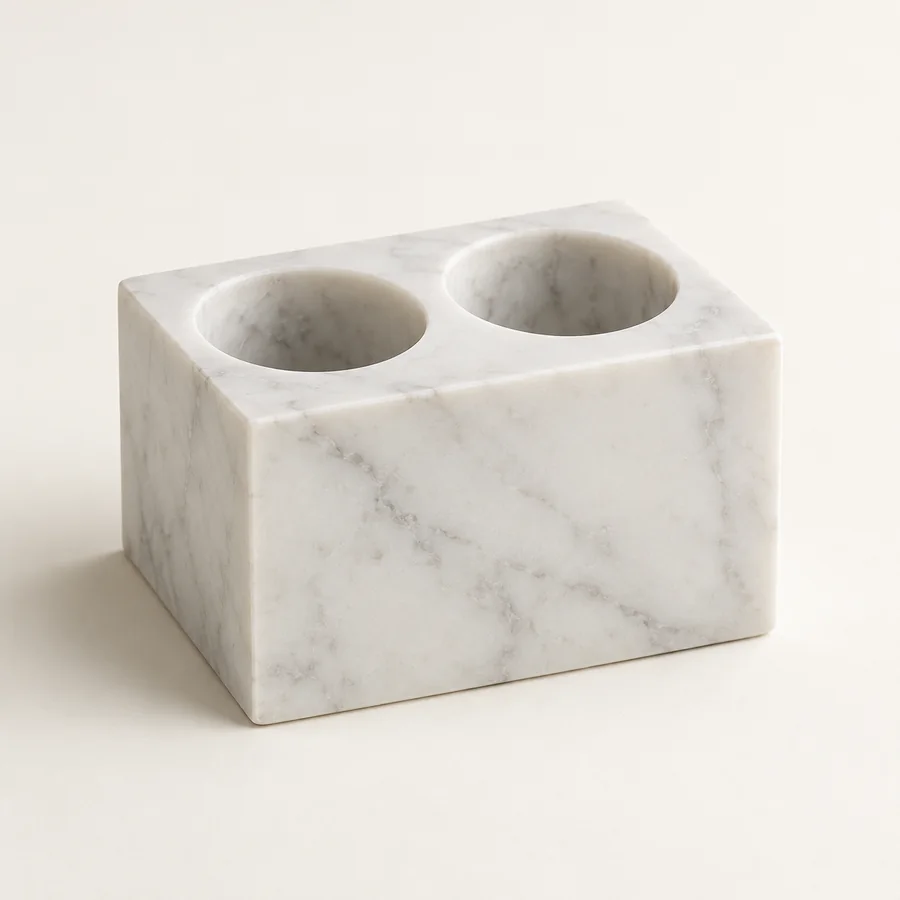
A long stone block divided by three upright paper slots
The marble envelope holder with three slots proposal uses a long solid block containing three parallel upright slots. The repeated openings give the design its linear organisation and provide a starting point for planning a paper-sorting arrangement. White marble is proposed for a custom desk or reception accessory, with final dimensions, material and finish confirmed by quotation. The illustration describes the stone form rather than a stocked organiser, an included stationery collection or a demonstrated capacity for particular envelope sizes.
Define the paper formats and sorting arrangement
Measure the envelopes, folded papers or cards you intend to place in each slot, including their thickness when filled. Tell the maker whether the three positions will separate different formats or hold similar items together. A full envelope behaves differently from an empty flat sheet, so share realistic dimensions for the intended contents. The design’s three-slot count does not establish how many items can be stored in each opening. Paper capacity and fit require a review of the actual contents and confirmed internal measurements.
Confirm usable openings separately from the outside length
The suggested overall format is approximately 22 × 10 × 10 cm. These indicative measurements describe the complete custom block, including the stone between and around the slots. They do not state the usable slot length, width or insertion depth. Ask for each opening and the intervening stone to be dimensioned on a plan and section. Include the space needed to insert and remove papers. If larger formats are requested, review the full block and divider proportions together before the stone is cut.
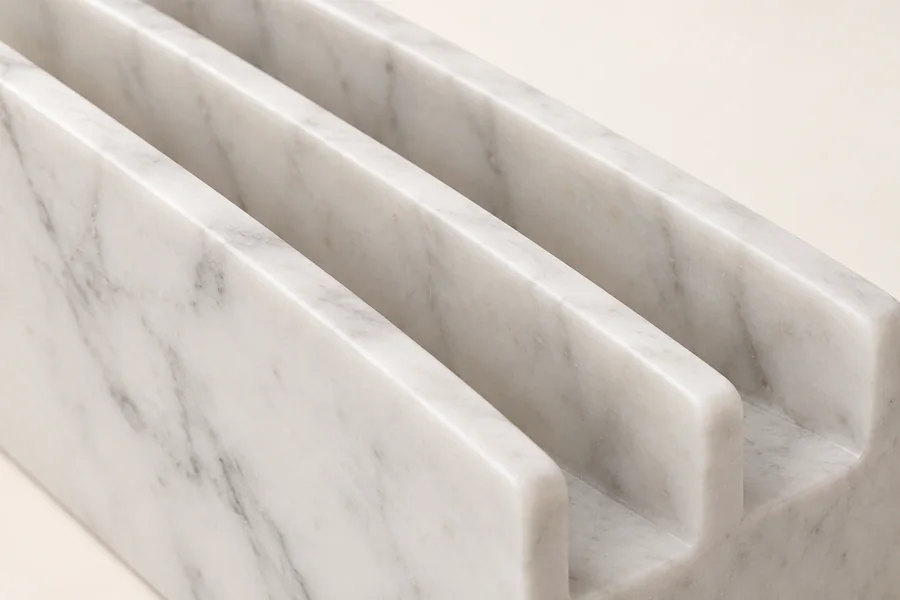
Look closely at the three parallel cuts
The close illustration highlights the repeated slots. Request a detail showing their alignment, upper edges, internal profiles and the stone remaining between neighbouring openings. Agree the edge treatment appropriate for the selected marble and intended paper contact. The rendering does not establish exact cutting tolerances, divider thickness or a completed surface finish. Keep the approved slot detail with the overall drawing when changing the design scale, since a deeper or wider opening affects the surrounding stone as well as the usable paper space.
Decide how much paper should remain visible
Consider the height of the contents above the stone and whether labels, addresses or category tabs need to remain readable. Compare a mock-up from your seated position and from any visitor-facing side that matters. A deeper slot may conceal information you want to see, while taller papers change the complete display envelope. Have the maker review the insertion depth and spacing with the actual formats. The generated arrangement does not demonstrate visibility or easy retrieval for every paper size that could fit within the outside block length.
Plan access to all three sorting positions
Mark the proposed footprint on the intended desk or counter and leave space to reach each opening. Explain which side will face you and whether the holder will sit against a wall or beside a screen. Check the clearance above the stone for lifting papers straight out in the intended arrangement. A carved slot is fixed unless an adjustable fitting is expressly agreed. The proposal does not include a locking mechanism, so it should not be treated as secure storage for documents requiring controlled access.
Choose stone for a broad face and repeated openings
Representative white-marble references can help you compare natural markings across the long front and narrow upper surfaces. A vein may continue through the visual rhythm of the slots and add another line beside the papers. Review the material with your desk finish and stationery colours, then agree the desired finish and acceptable variation. The generated white surface does not identify an exact block or final polish. If other desk accessories are commissioned alongside it, discuss the desired visual relationship without expecting identical natural grain.
Keep the slots empty when moving or cleaning the stone
Remove all papers before lifting the holder and support its broad base according to the maker’s guidance. Avoid moving it by pulling an envelope or gripping a thin section between slots. Ask about removable contact pads suitable for the actual furniture finish, including whether they are supplied. Follow the approved care method for the selected marble and the narrow internal areas. Allow the stone to dry before replacing stationery, keeping cleaning moisture and products away from paper that could absorb them.
Request the holder with a paper-size schedule
Send the intended formats, filled thicknesses, sorting layout, quantity and delivery postcode through a three-slot marble envelope-holder enquiry. Confirm the internal drawing, selected stone, finish, supplied components, price, production timing, packing and delivery. Images are AI-generated design illustrations rather than photographs of available stock. Use the maker’s specific maintenance advice, with the Natural Stone Institute general care guide providing a supporting marble reference.
Compare smaller formats for cards and a desk sign
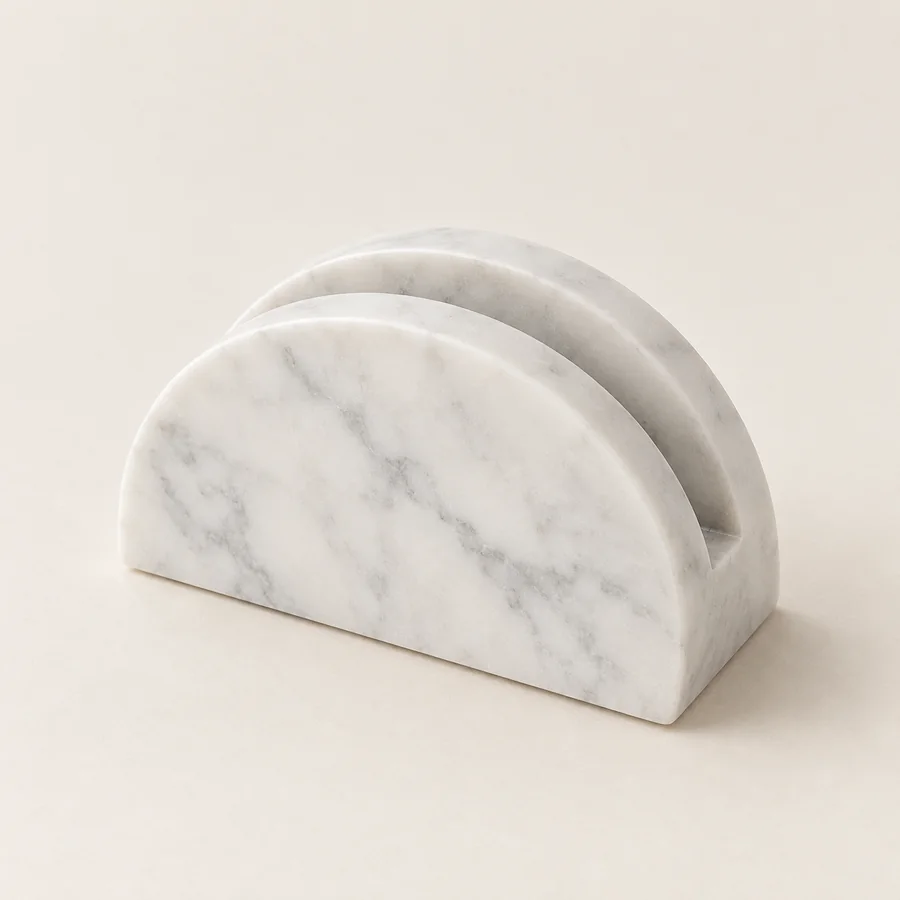
The business-card arch stand proposes one narrow horizontal slot in a compact semicircular block. The desk nameplate base uses a long wedge with a narrow top sign slot. Compare each design’s approved paper or insert fit with the three-slot envelope layout before ordering a custom group.
Reviews
There are no reviews yet.