
Description
Four broad stone steps with a square outline
This stepped pyramid marble lamp base proposal rises through four broad levels from a square base to a flat top. The repeated changes in width give it a geometric outline that can be developed for a custom table-lamp project. White marble is the proposed material, subject to the actual selection and quotation. The listing describes a stone component; the complete lamp arrangement, final dimensions and expressly included parts need to be agreed before manufacture.
Compare the front and corner views
Seen squarely from the front, the broad steps create a layered elevation. A view across a corner reveals another relationship between the adjoining faces. Consider which view will be most common from the doorway or seating beside the intended table. Include that orientation in your room sketch, along with the proposed shade. The stepped outline should be evaluated as part of the complete lamp composition, while the lamp maker reviews the actual assembly for its intended position and use.
Check each level on a dimensioned drawing
The suggested outside size is approximately 18 × 18 × 30 cm. These are planning dimensions for a custom design rather than measurements from a stocked product. Ask for the overall footprint and height, the four levels and the flat top to be shown separately. The outside width does not establish the width of a particular ledge or the usable fitting area. A final drawing should resolve those relationships before the stone is cut.
If you change the total height, review the step widths and their visual spacing at the same time. Simply extending one level can alter the character of the whole pyramid. Mark the preferred proportions on a single approved elevation and ask the maker to confirm what is appropriate for the chosen marble. Keep the lower contact area and supporting surface within the review of the finished lamp assembly rather than relying on the rendered perspective.
Agree the electrical fitting requirements separately
Select the intended shade and hardware with a competent lamp professional, then provide the resulting fitting and cable requirements to the stone maker. A flat top in an image does not define a standard opening, internal route or fixing method. The finished lamp needs its own assembly assessment. Wiring, lampholder, shade, electrical fittings and certification are included only when expressly quoted. Record the responsibilities of the stone supplier and lamp maker so both work from the same approved requirements.
Define the corners and ledge profiles
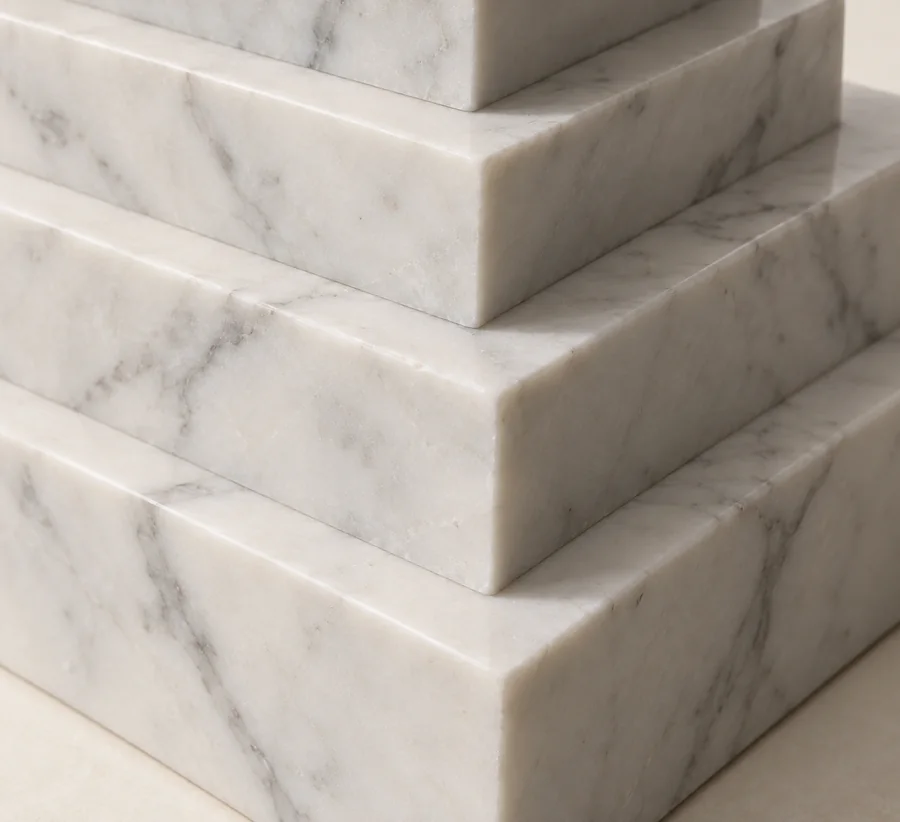
The corners of the four levels are a useful detail to examine when developing this design. Ask for the intended edge character and surface transitions to be represented on the drawing. A softer treatment and a more pronounced profile can give different visual results under ordinary room lighting. Have the maker confirm the appropriate treatment for the selected stone and dimensions. The shadows in an AI illustration suggest the form but do not establish a precise carving depth or finished edge.
Review marble markings across the steps
Natural veins can travel across the visible faces and add a second pattern to the tiered shape. Compare representative white-marble references with the proposed shade fabric and surrounding furniture. Decide whether a quieter or more visibly marked selection suits the intended room, subject to what the maker can supply. Confirm the finish and acceptable material variation in the quotation. The generated white surface does not identify the exact block or guarantee a continuous pattern through separately made components.
Prepare the custom lamp-base brief
Send your measured elevation, preferred orientation and approved fitting details through a stepped-pyramid lamp-base enquiry. Include the quantity, delivery postcode and any requirement for coordinated pieces. The quotation should confirm the stone, final dimensions, included parts, price, production timing, packing and delivery arrangements. The product images are AI-generated design proposals, not photographs of available stock or a tested working lamp. Keep any requested changes with the final specification rather than relying on a verbal description of the steps.
Clean the ledges without stressing the edges
Follow the maintenance advice supplied for the actual marble finish and complete lamp equipment. Dust the visible levels gently with a soft cloth, and ask which stone-suitable cleaner is appropriate when needed. The Natural Stone Institute stone-care reference offers general guidance alongside those specific instructions. Obtain handling directions for the finished component; the projecting levels should not be assumed to be suitable grips for lifting or moving the assembled lamp.
Compare tiers with rounded carved forms
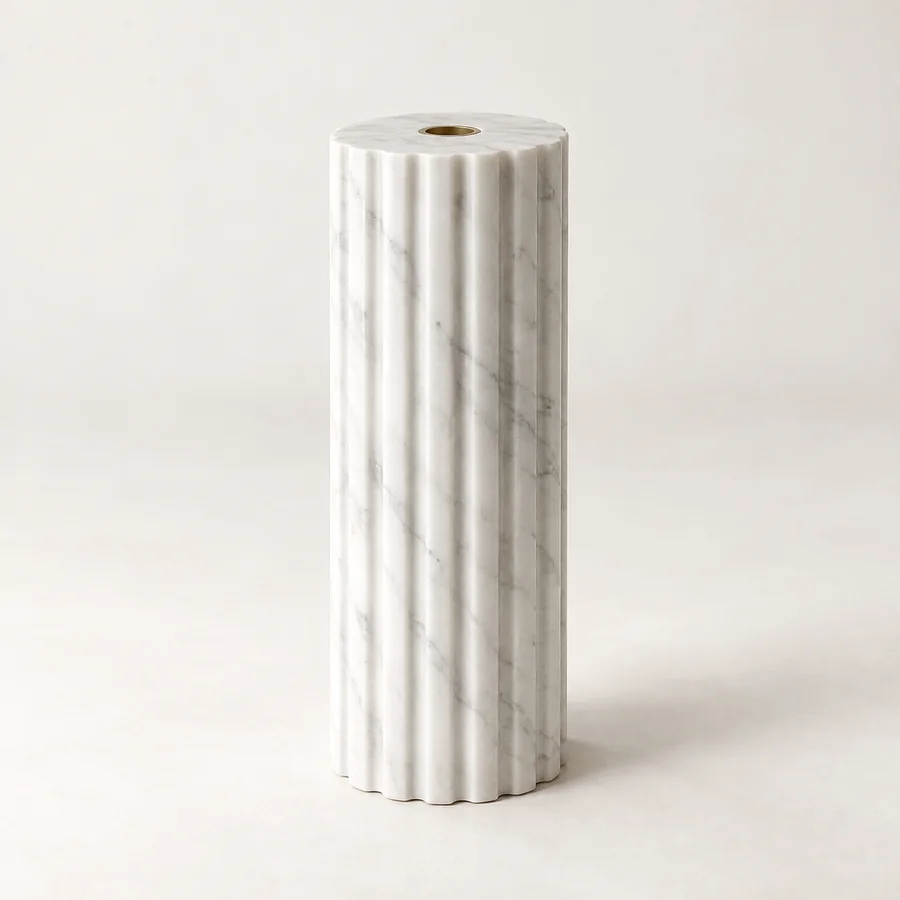
The ribbed drum lamp base carries horizontal detail around a cylinder, while the stacked-sphere base uses three graduated rounded forms. Compare their elevations with the stepped square profile and your chosen shade before deciding which direction to develop.



Reviews
There are no reviews yet.