
Description
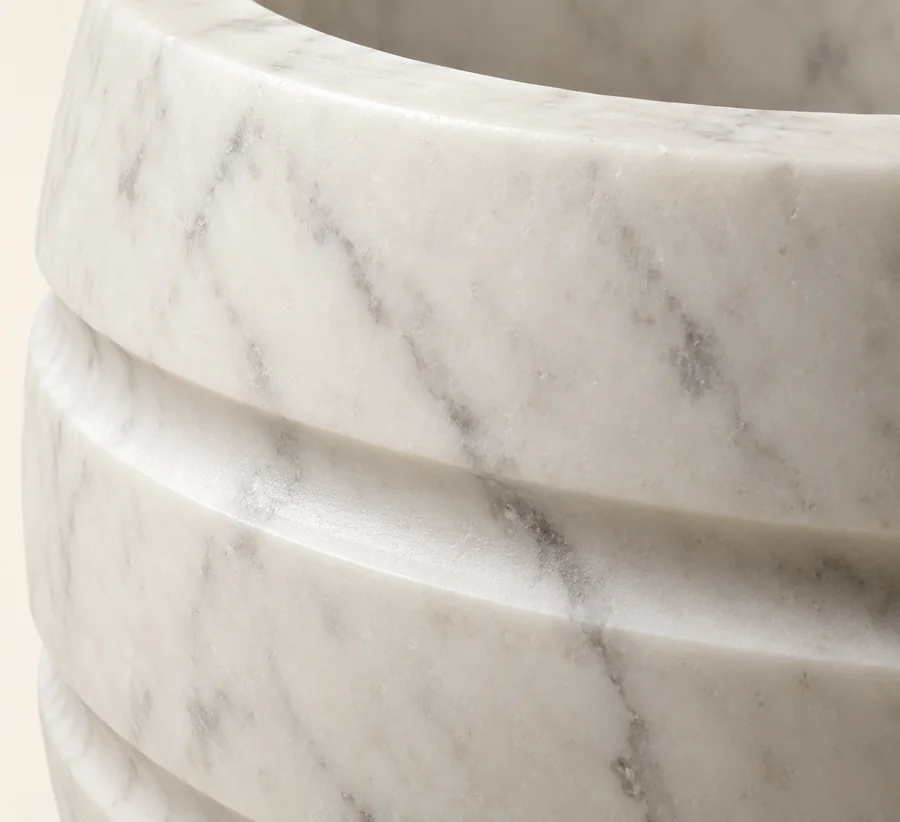
A barrel profile divided by three grooves
The barrel groove marble cachepot uses a rounded vessel crossed by three horizontal lines. The grooves emphasise the body’s width, creating a different effect from vertical fluting or a faceted planter.
Balance the rounded body with the planting
The outside planning size is approximately 30 × 30 × 35 cm. Confirm the internal opening and depth rather than selecting a plant pot from the barrel’s widest point. Consider how much of the grooved body will remain visible beneath the foliage.
Discuss the actual white marble, groove depth and finish in the custom specification. Drainage, waterproofing and a liner are separate requirements; treat the piece as an outer decorative vessel unless those features are expressly confirmed. Any elevated display must be assessed for the full planted weight.
Include inner-pot dimensions in your barrel cachepot quotation request. Ask for the completed size, included parts and making time in writing. The images represent an AI-generated design proposal, with actual grain and order availability confirmed separately.
Horizontal detail around a rounded body
The three grooves lead the eye around the cachepot’s width, reinforcing the barrel shape rather than pulling attention upward. Consider that effect beside vertically lined furniture, a plain wall or other plant containers. The rounded middle can make the body visually prominent even when the upper opening is partly screened by foliage. A drawing of the complete arrangement helps show how much of the barrel and all three horizontal lines will remain visible from the intended viewing position.
Choose the groove emphasis at the final size
Ask for a side detail showing the three lines and the spaces between them. Their relationship to the top and bottom of the vessel is part of the design, so it should be reviewed if the height or width changes. A subtle groove treatment can read differently from a stronger one under the room’s usual lighting. The maker should confirm the carving and edge character for the selected marble. The generated shadows suggest the proposal but should not be used as measurements for the final surface detail.
Measure the opening separately from the belly
The barrel’s widest point does not tell you which inner pot can pass through the top. Provide the actual removable container profile, including the rim and any space needed to lift it out. Ask for the usable entrance, internal cavity and approved clearances to be recorded together. A marble planter pot used as a decorative outer vessel should be developed around that confirmed arrangement. If several internal containers are being considered, settle the intended one before approving the stone dimensions rather than assuming all nominally similar pots will fit.
Use neighbouring shapes to assess the composition
A rounded barrel can provide a softer counterpoint to square planters or straight joinery, while the horizontal lines can relate to low furniture and shelving. Compare these visual relationships from the normal viewing distance. If several objects are grouped together, give the cachepot enough visible space for its curved sides to read clearly. Plant choice and foliage spread should be discussed with the appropriate supplier, with the decorative outline and actual planting requirements kept connected in the agreed arrangement rather than estimated from the rendering.
Review material samples across the broad face
The curved body offers a substantial area for the selected marble’s markings. Natural veins may cross the grooves and create a different pattern from the illustrated white surface. Discuss whether you prefer restrained markings or a more varied appearance, subject to material availability, and compare representative references with nearby finishes. Confirm the selected stone and surface treatment for the actual indoor or sheltered setting. A sample establishes a direction for the commission while the agreed natural variation should remain part of the approved order.
Record the practical display requirements
Have the supporting location reviewed for the complete vessel and planting, especially for a raised display. Identify the removable liner or pot and any expressly included drainage or waterproofing details in the quotation. Ask for care and handling guidance that protects the grooved body and rim, and inspect those areas before use. Retain the approved cavity drawing, material selection and maintenance information together. If the container or location later changes, review the fit and water-management arrangement again instead of treating the decorative barrel form as a universal planting specification.
Explore a related design direction
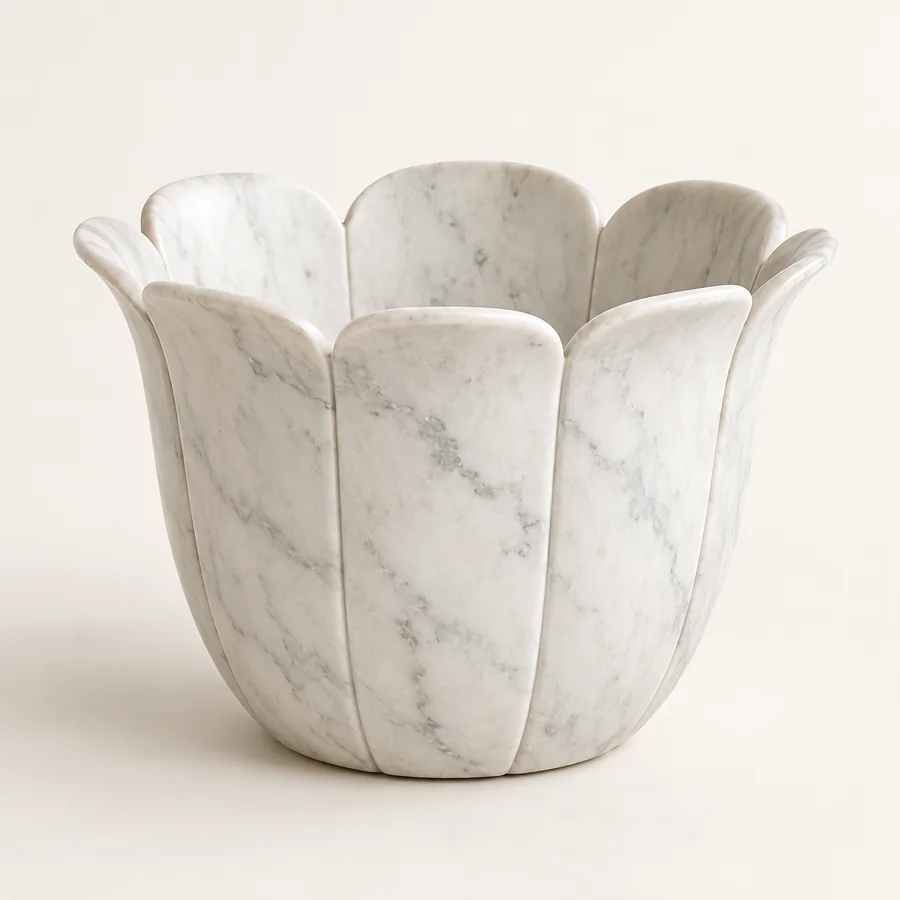
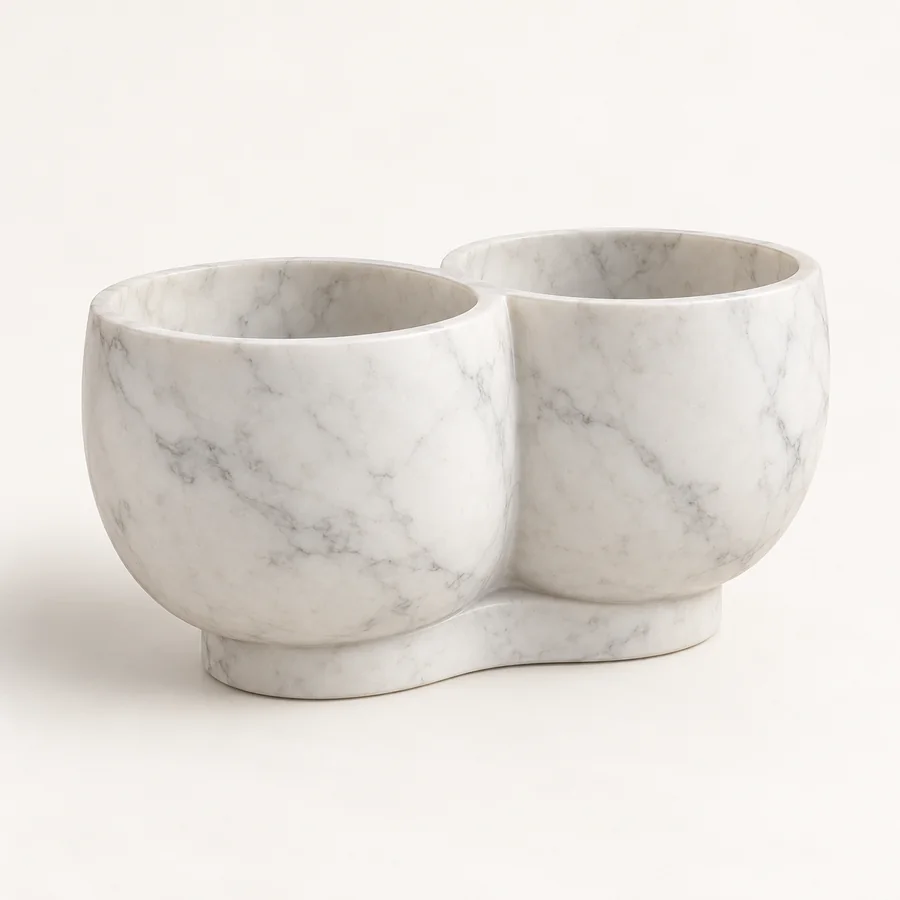
the low horizontal-ribbed planter emphasises a wider shallow bowl. the oval reeded cachepot changes the direction of the surface lines. Compare those profiles with the barrel’s three grooves when choosing the balance of shape and texture.
The horizontal grooves should be cared for according to the selected marble and surface finish. The Marazzi stone maintenance reference offers general guidance to discuss alongside the care instructions for the commissioned piece.


Reviews
There are no reviews yet.