
Description
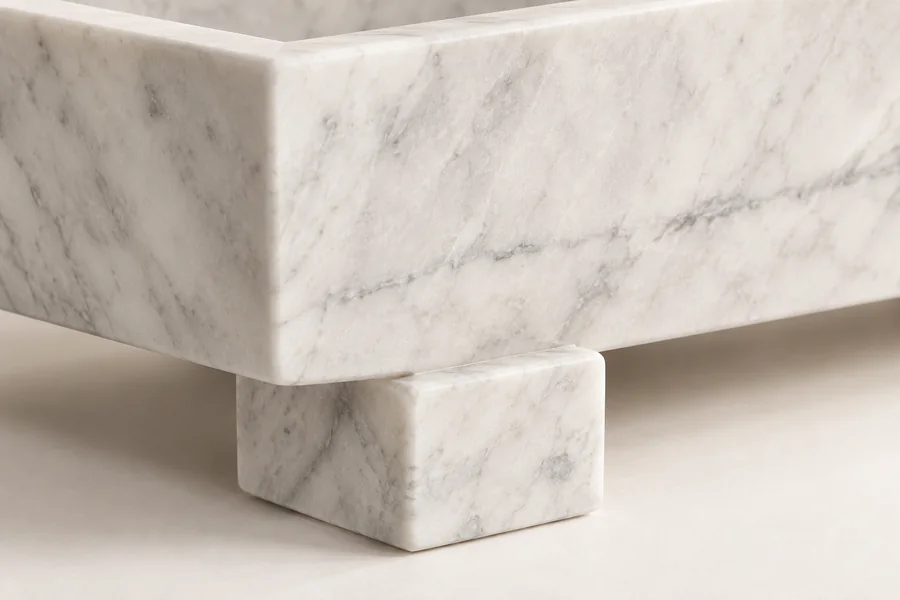
A long trough raised on four short feet
The marble window trough planter proposal uses a rectangular open vessel with four stout feet. Its long shape can be considered for a sheltered plant display where several inner pots are arranged in one visual line.
Measure the usable planting space
The suggested 60 × 20 × 22 cm outside size is an approximate planning format. Confirm the internal opening, wall thickness and any removable pots or liner separately. Treat the trough as a decorative outer vessel unless drainage and waterproofing are expressly included in the specification.
Discuss the selected white marble and finish for the location. Soil, pots and water increase the completed weight; a competent person should assess any raised window or balcony position before installation. Plan water management so it cannot collect against walls, furniture or flooring.
Commission the trough for your display
Include support dimensions in a long-trough quotation request. Confirm price, making time and all included components. The images are AI-generated design illustrations with no plants or internal pots supplied by implication; finished stone character and final dimensions require approval.
A long planting line above four short feet
The rectangular vessel gives the display a horizontal emphasis, while the four feet make the base part of the visible form. Consider how the trough will relate to the length of a window, console or other approved supporting surface. A measured elevation can show the planter outline together with the intended inner pots and foliage. This is more useful than choosing the outside length alone, because the planting and the amount of exposed stone both influence how the complete display will appear.
Plan the usable opening around real containers
Select the removable pots or liner before approving the interior dimensions. Give the maker their measured profiles, including any wider rims and the space needed to lift them out. A marble planter box can look generous from the outside while offering a different usable opening once wall thickness and the actual vessel shape are considered. Ask for a plan and section showing the approved internal arrangement. The quotation should identify the stone trough separately from any expressly included pots, liner or other planting components.
Decide how much of the trough should remain visible
Compare the intended plants with the long upper rim and feet so the decorative vessel does not disappear beneath the arrangement. Repeated inner-pot shapes can create an ordered line, while varied planting may produce a different visual rhythm within the same approved opening. Discuss plant choice and care with an appropriate supplier rather than taking the stone dimensions as a planting recommendation. The design brief can record the desired appearance, with the actual containers and water-management arrangement confirmed before the final stone specification is settled.
Review the entire supporting location
Provide photographs and measurements of the proposed surface to the competent person assessing the installation. The review should account for the complete planted arrangement, rather than treating an empty stone illustration as evidence of suitability. The four feet also need an approved relationship to the receiving surface and any agreed protective or fixing components. If the location is raised or near a building edge, obtain the relevant professional assessment before manufacture. Record the approved support information with the order so the maker and installer are working from the same plan.
Choose marble alongside the surrounding interior
Compare representative white-marble references with the window trim, nearby furniture or sheltered-balcony finishes. Natural markings may travel along the long faces and differ from the generated picture. Decide whether you prefer a quieter selection or more visible veining, subject to material availability. Ask the maker to confirm the finish for the intended exposure and use, including the visible rim and feet. A white marble planter should be selected through actual material references and an agreed specification rather than an assumption that every natural-stone surface will reproduce the illustration.
Keep water and maintenance access in the approved plan
Confirm how the inner pots or liner will be removed, inspected and maintained, and have any drainage or waterproofing provisions identified expressly in the order. The arrangement should follow the approved water-management plan for the actual supporting location. Ask for packing and handling instructions, then inspect the trough, feet and interior before adding planting components. Retain the final drawings, material details and care information together. If the containers, plants or position later change, review the complete setup again rather than assuming the existing decorative outer vessel suits every revised arrangement.
Explore a related design direction
the radial succulent display groups separate cups in six pockets. the leaf-pocket wall planter develops a vertical botanical form. Compare their usable interior arrangements with the long trough before choosing the shape and support that suit the intended display.
The trough walls, rim and feet need care suited to the confirmed marble and surrounding finishes. The Marazzi stone maintenance reference offers general guidance to discuss alongside the care instructions for the commissioned piece.

Reviews
There are no reviews yet.