
Description
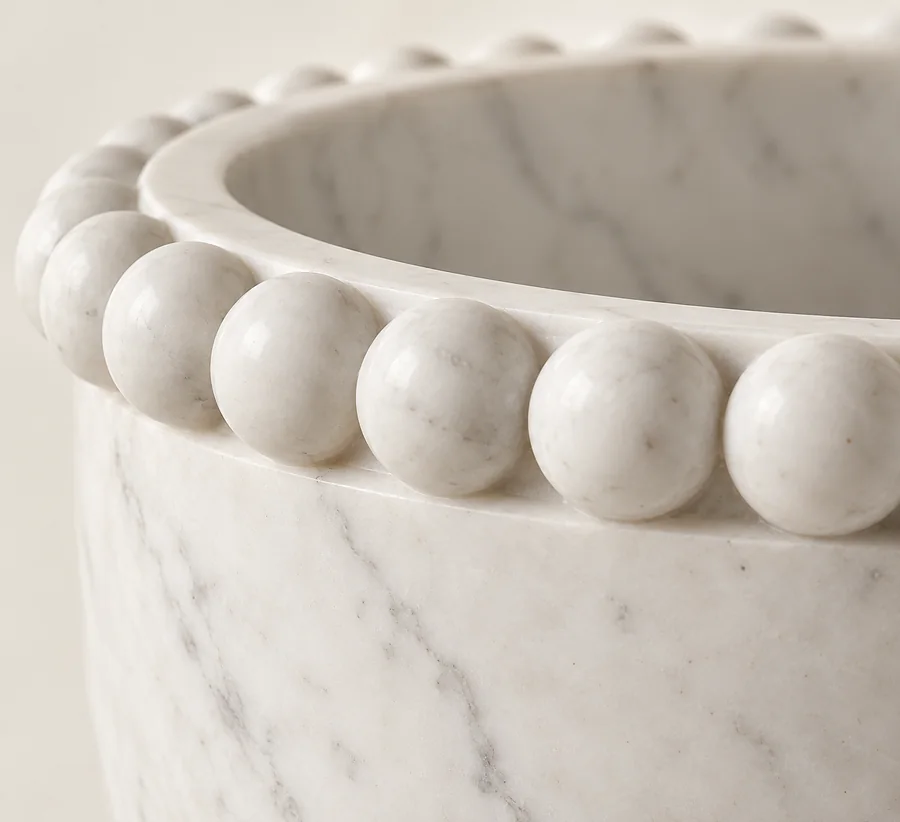
A round pot finished with a carved bead border
The beaded rim marble cachepot places a ring of small carved forms around the lip of an open vessel. The border gives the planting a defined frame while leaving the main round body relatively plain.
Keep the beadwork clear of the inner pot
Approximately 30 × 30 × 35 cm is the suggested outside planning size. Confirm the usable opening beneath the bead border and the depth for a removable pot. Consider how the foliage will sit above the lip without hiding all of its detail.
Agree the selected white marble, bead scale and finish before manufacture. Drainage and waterproofing are not assumed; specify any liner and manage water away from the supporting surface. Review the full planted weight if the display will stand above floor level.
Send your preferred inner-pot dimensions through the beaded-lip cachepot enquiry. Confirm components, final size, cost and production timing. These pictures are AI-generated design proposals, with no plants or internal containers included unless expressly quoted.
A detailed border around a plain round body
The carved bead ring concentrates the ornament at the top, leaving the curved vessel below relatively quiet. Consider how that balance will look beside nearby furniture and other plant containers. From a higher view, the border may frame the planting clearly; from a lower position, the plain body and bead silhouette will read together. A measured elevation with the intended plant container can help you judge the proportion before choosing the final size, rather than assessing the lip only through its close-up.
Agree the bead scale with the whole vessel
Ask for a detail showing how the carved forms relate to the opening and outer edge. Smaller-looking beads can create a different visual rhythm from a more prominent border, and the maker should review the treatment for the selected marble. If the diameter or height changes, reconsider the lip proportions alongside the body. The generated highlights suggest a decorative effect rather than defining the final carving dimensions. Keep the approved bead detail with the overall drawing so the order describes a complete coordinated vessel.
Fit the removable pot beneath the border
Provide the actual inner container or liner profile, including the widest rim and the space needed to lift it out. The bead ring may be part of the outside span, so that measurement cannot identify the usable opening. Ask for a plan and section showing the approved cavity and clearances. A round marble planter should be developed around the confirmed insert rather than an assumed standard pot size. Identify any expressly included liner or container in the quotation so the stone body and planting components are clearly distinguished.
Let the planting and beadwork share the display
Consider how much foliage will cover the rim and whether you want the entire carved border visible from the main approach. A drawn view can help compare the plant outline with the repeated detail around the opening. Discuss suitable plants and their care with the appropriate supplier, then coordinate the resulting container dimensions with the stone maker. The decorative vessel does not establish planting depth or watering needs. Keeping the visual brief and practical insert information together helps preserve the proposed beadwork in the finished arrangement.
Select white marble for both border and body
Natural veins may cross the small carved forms differently from the larger plain faces. Review representative material references beside nearby walls, furniture and other pots, and agree the variation you are prepared to accept. A quieter selection may emphasise the bead rhythm, while stronger markings can make the whole vessel more visually active. Ask the maker to confirm the finish and edge character for the actual indoor or sheltered location. The generated surface illustrates a proposal rather than identifying the exact stone and polish that will be supplied.
Keep care and practical details with the order
Have the location reviewed for the complete stone and planted arrangement, including any raised support. Record the approved removable container and any expressly included liner, drainage or waterproofing provisions before manufacture. Request packing and handling guidance that protects the bead border, then inspect the rim and body before use. Retain the final drawings, material specification and care information together. If the planter is later moved or used with a different insert, review the fit, support and water-management arrangements again rather than assuming the original decorative proposal suits every change.
Explore a related design direction
the flared-petal cachepot uses broader floral divisions at its mouth. the stepped-rim square cachepot frames its opening with architectural levels. Compare those top details with the bead border when choosing how the vessel should frame the planting.
The bead border and plain body need maintenance appropriate to the chosen marble and finish. The Natural Stone Institute care guide offers general guidance to discuss alongside the care instructions for the commissioned piece.


Reviews
There are no reviews yet.