
Description
An upright oval ring with an open centre
The oval arch marble lamp base proposal places a thick rounded ring on a rectangular foot, with a top bore for a separately specified fitting arrangement. The open centre distinguishes it from a solid column, making the viewing direction part of the design. It is a stone component for a custom lamp project, with white marble proposed subject to selection. The final shape, dimensions and included parts are confirmed in the commissioned specification rather than established by the rendered image.
Keep the oval opening in the main view
Consider how the open ring will appear from the room entrance and from the seating beside the intended display. Turning the component can change the visible opening and the relationship between the ring and foot. A measured front and side view can help you compare orientations with the proposed shade above. Include nearby furniture in the elevation so the stone silhouette is assessed in context. Choose the preferred front before the fitting plan and final proportions are approved for manufacture.
Separate outside size from the usable opening
The suggested planning format is approximately 20 × 10 × 30 cm. These are indicative outside dimensions for a custom component, not measurements from finished stock. Ask the maker to show the oval opening, surrounding stone, rectangular foot and top fitting area independently. The outside height does not determine the ring’s usable centre or bore. If the proportions change, have the complete stone form and lamp assembly reviewed together rather than treating the opening as a decorative gap that can be altered in isolation.
Coordinate the bore and hardware with a lamp professional
Provide the stone maker with the requirements approved for the actual fitting, shade and cable arrangement. The top bore shown does not establish a standard socket size or explain the internal route of a finished lamp. Have a competent professional assess the complete assembly before the stonework is finalised. Wiring, lampholder, shade, electrical fittings and certification are included only if expressly quoted. Keep the supplier responsibilities clear so the open stone body is developed around the approved project rather than adapted from its appearance alone.
Balance the ring with the shade outline
Review the complete lamp elevation, looking at how much of the oval remains visible and how its width relates visually to the proposed shade. A broad upper silhouette and a narrower one can create different compositions over the same base. The lamp maker should review the actual construction and intended use alongside those visual choices. A generated perspective is useful as a starting idea, while the approved drawing needs to show the specific stone, fitting and shade arrangement that will be commissioned.
The background seen through the opening also contributes to the composition. A patterned wall, curtain or group of nearby accessories can make the oval read differently from a plain surface. Include that background in a room photograph or sketch with your enquiry. It helps communicate why you chose an open form and gives the maker a clearer visual brief without treating the background shown in the illustration as part of the supplied product.
Choose marble across the curved surface
Natural markings may follow or cross the oval and appear differently on the rectangular foot. Compare representative white-marble references with the proposed shade material, furniture and wall colour. Discuss whether you prefer restrained veins or a more visibly patterned stone, subject to availability. Ask the maker to confirm the surface finish and edge treatment, including the visible inner curve. The rendered white surface does not identify the exact block, polish or any assumed continuous grain through separately made components.
Specify the complete commission clearly
Send the preferred orientation, measured lamp elevation and approved fitting details through an oval-ring lamp-base enquiry. Confirm the final dimensions, supplied stone, expressly included parts, packing and delivery arrangements. Ask for handling guidance that protects the ring and foot. Product images are AI-generated design illustrations rather than photographs of a stocked component or tested working lamp. The approved quotation establishes the final price, production timing and material selection.
Care for the inner curve and supporting foot
Use the maintenance method supplied for the selected marble and finish, together with the instructions for the completed lamp equipment. Keep access around the oval for gentle dusting with a soft cloth, and ask which stone-suitable cleaner is appropriate if needed. The Natural Stone Institute care guidance offers a general material reference. Move the finished component only as directed by the maker rather than using the open ring as a carrying handle.
Compare open and solid base silhouettes
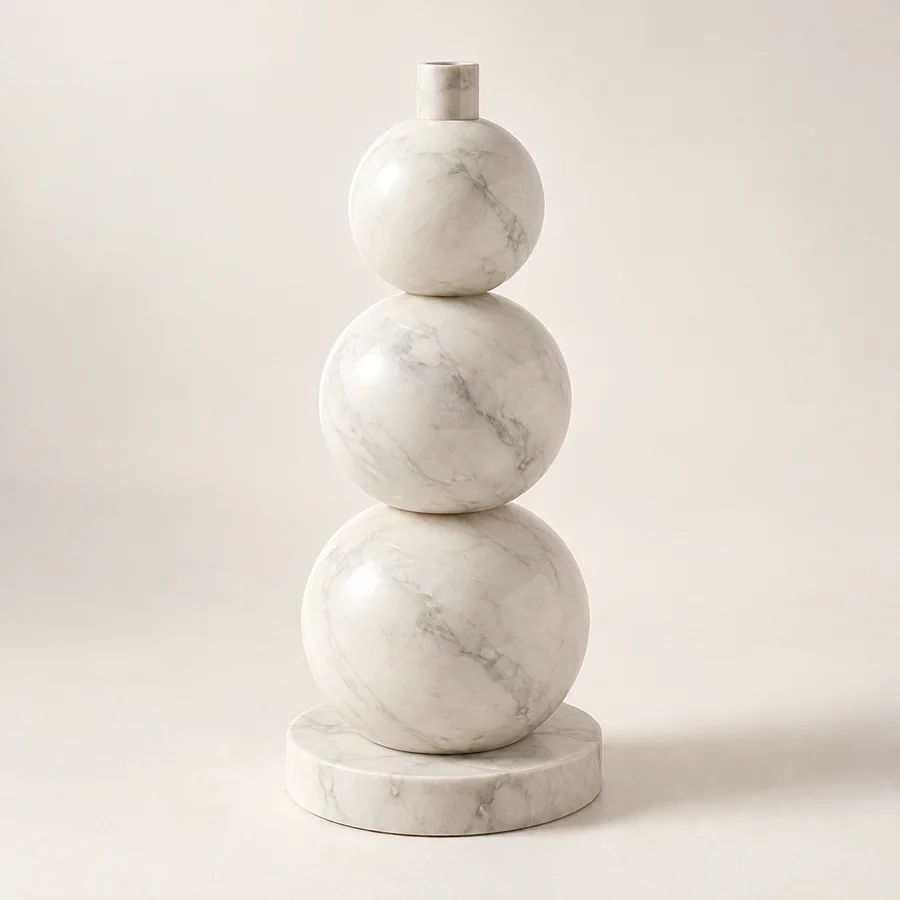
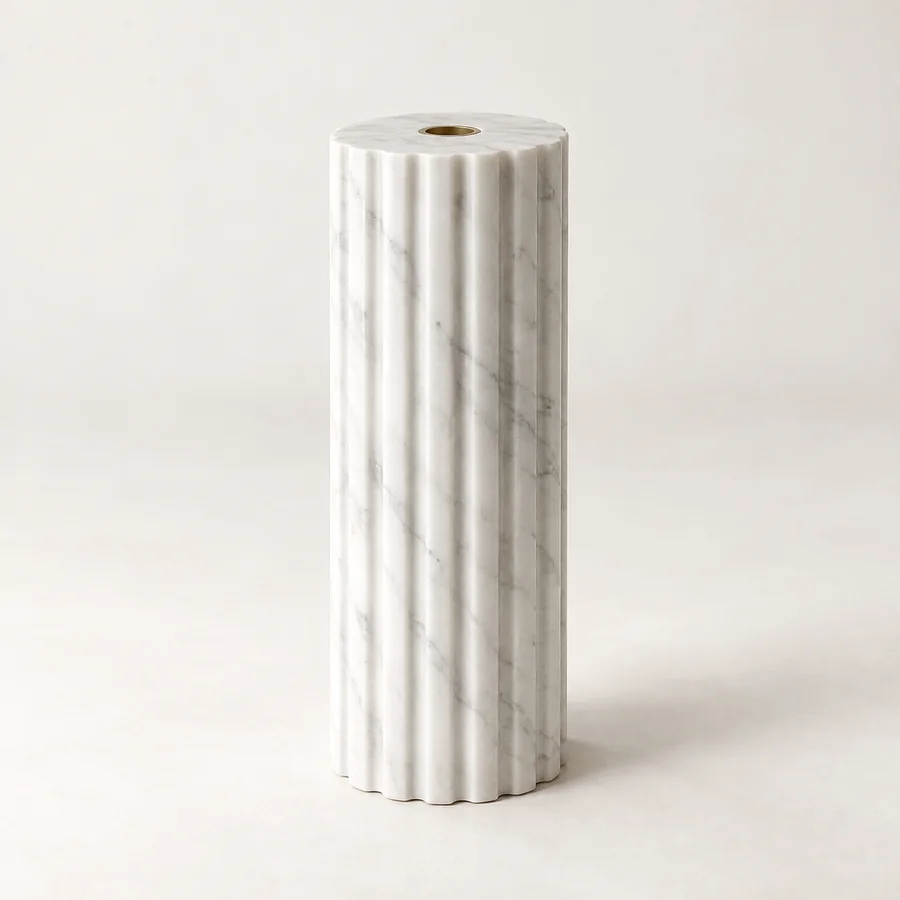
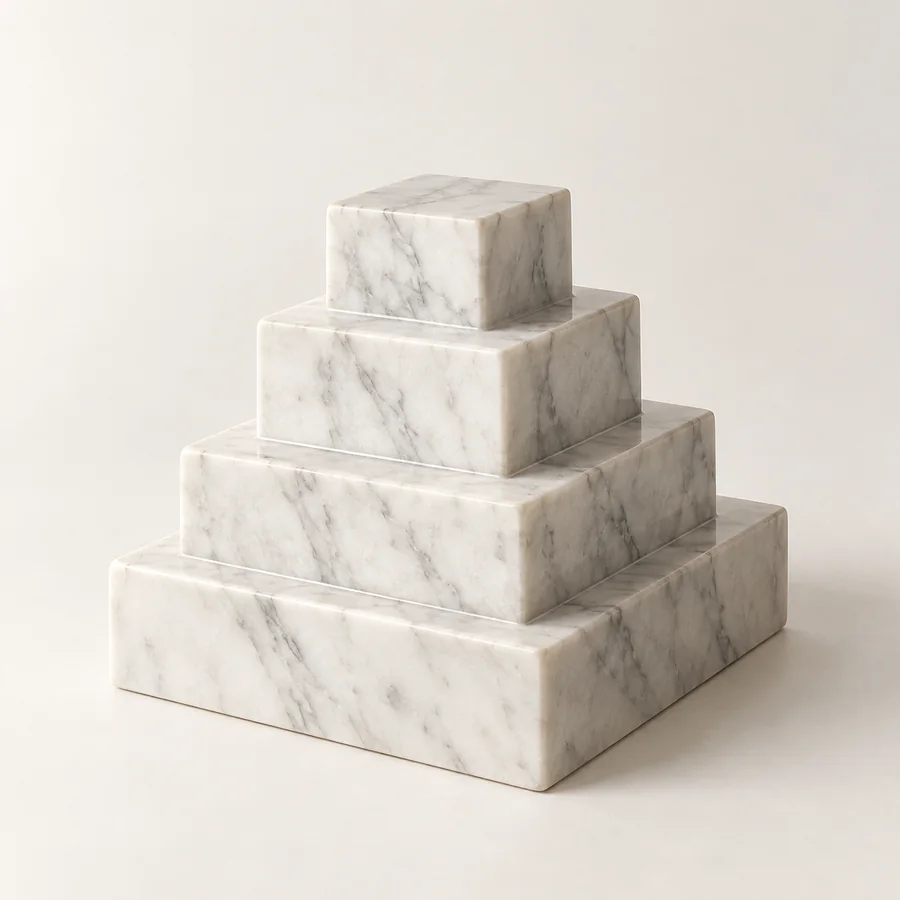
The twisted-pillar base creates movement through a turning square body. The stepped-pyramid base develops a solid tiered outline. Compare their elevations with the oval opening before choosing the stone form for the intended lamp project.


Reviews
There are no reviews yet.