
Description
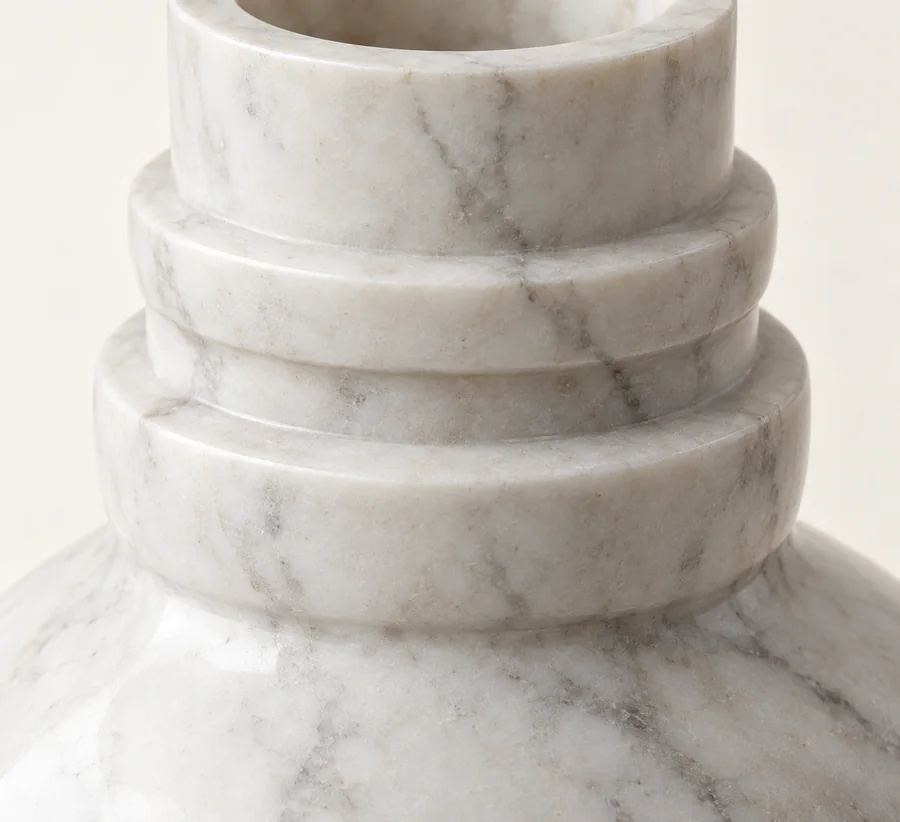
Three stepped rings around a bottle-shaped neck
The stepped neck marble bottle vase proposal keeps the main body bottle-shaped and concentrates its decoration in three ring steps around the neck. The contrast between the quieter body and repeated upper detail gives the piece its individual outline. White marble is proposed for a custom commission, with actual material, size and finish confirmed by quotation. It is initially intended for dry-stem styling; a hollow appearance does not demonstrate water-holding performance or the dimensions of the usable interior.
Keep the neck visible in the stem arrangement
When choosing dried flowers or decorative stems, consider how their spread will frame the three rings. A dense arrangement can conceal the stepped neck, while a more open one may leave the profile visible. Sketch the intended height above the mouth and include the normal viewing direction. Ask the maker to confirm the opening and usable depth for the proposed stems. The rendering does not establish stem capacity, and bundles should not be forced against the rim or rings.
Measure the bottle form separately from its opening
The suggested outside dimensions are approximately 12 × 12 × 28 cm. They are planning measurements for a custom design, not dimensions taken from a finished item in stock. Ask for the body, neck, three ring profiles, base and internal space to be identified on the final drawing. The outside height does not equal the available stem depth. If you want another size, review the bottle proportions and usable cavity together rather than extending only the neck.
Compare the three ring steps in a close view
The spacing and edge character of the rings are useful details to settle before manufacture. Request a close elevation or section showing their relationship to the narrower neck and broader body. The maker should confirm a treatment appropriate for the selected marble and final measurements. A stronger stepped profile and a subtler version should be recorded in the approved drawing. Shadows in a generated image can suggest depth without establishing the precise carving or finished edge.
Plan the vase within the display height
Check the complete vase-and-stem composition against the space available on a shelf, console or side table. Include overhead clearance and nearby accessories in the room sketch. A narrow body may occupy less width than a broad shoulder design, but the stems can change the total spread. Choose a suitable level surface and have the finished contact area confirmed. Ask for appropriate removable furniture protection for the actual stone finish and supporting surface rather than assuming it is included.
Choose the marble with the repeated neck detail
Natural markings may cross several rings or appear more strongly on the wider body. Compare representative white-marble references with the intended stems and room materials. Discuss whether calmer veining or a more visible pattern suits the bottle outline, subject to what the maker can supply. Confirm the surface finish and acceptable variation in the quotation. The rendered surface does not identify the exact block, shade of white, polished result or vein pattern of a commissioned vase.
Ask about an inner vessel before fresh-flower use
This proposed design has no confirmed watertightness. Use it with dry arrangements unless the maker supplies and approves a suitable inner vessel for flowers requiring water. The neck opening and internal shape need a specific insert-fit and access review. Do not assume a standard glass vessel will pass through the mouth or use water directly in the stone because the body appears hollow. Keep the base dry and follow the agreed protection and care instructions for the supporting furniture.
Order against a defined custom specification
Share the stem plan, measured display location and preferred ring profile through a stepped-neck bottle-vase enquiry. Include the quantity, delivery postcode and any changes from the illustrated proportions. The quotation should identify final outside and usable dimensions, selected stone, finish, expressly included components, price and production timing. Packing and delivery arrangements are confirmed for the individual commission. Images are AI-generated design illustrations rather than photographs of available stock or a tested finished vase.
Dust around the rings without applying pressure
Follow the maker’s maintenance instructions for the actual marble and finish. Use a soft cloth for gentle routine dusting, and ask which stone-suitable cleaner to use if needed. Avoid acidic products, abrasive pads and gripping the neck rings as handles. General material advice is available from the Natural Stone Institute care guide. Request handling guidance that accounts for the completed construction before moving or packing the commissioned piece.
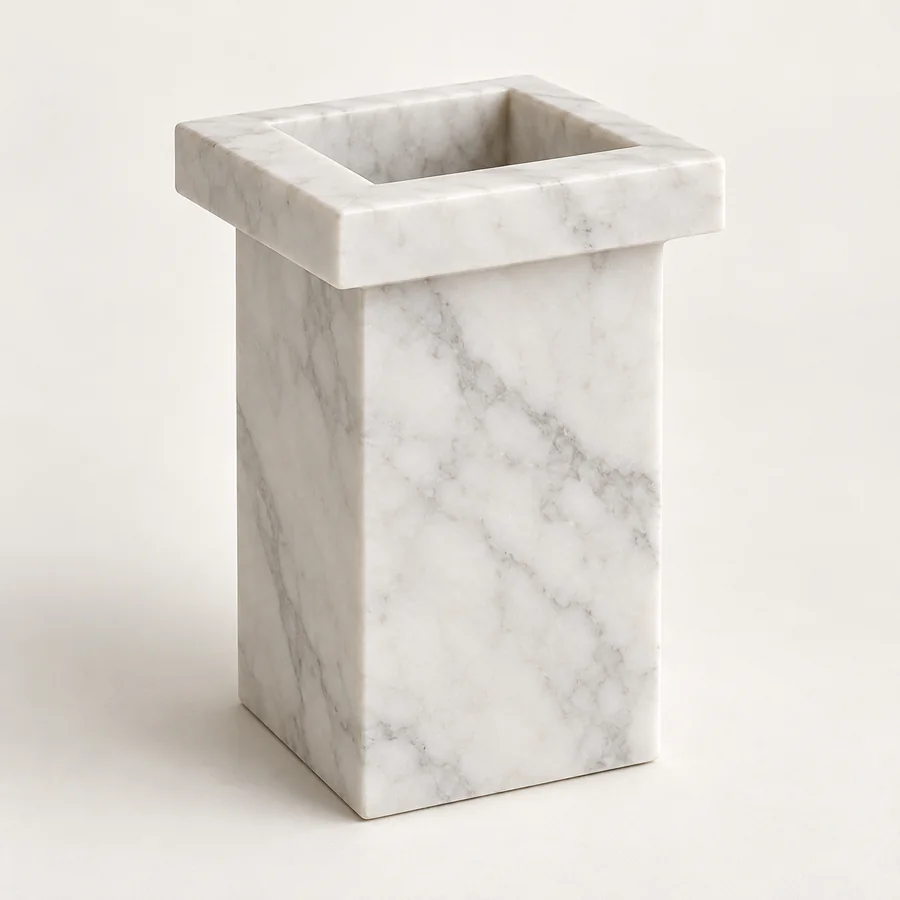
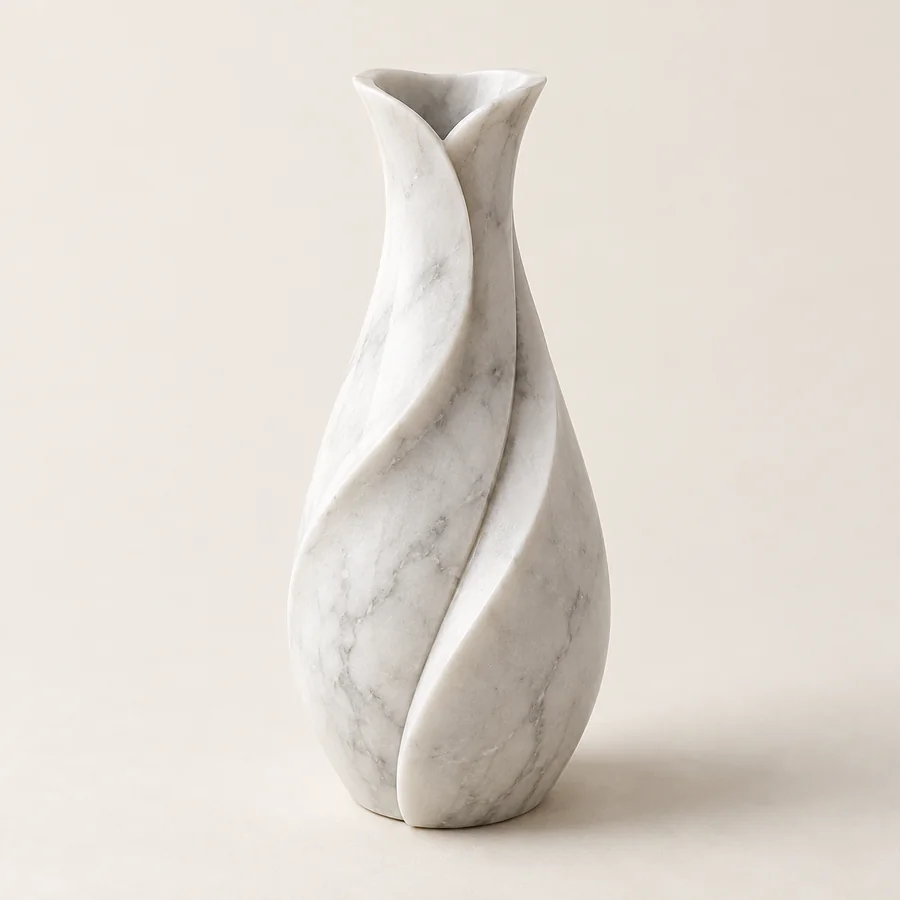
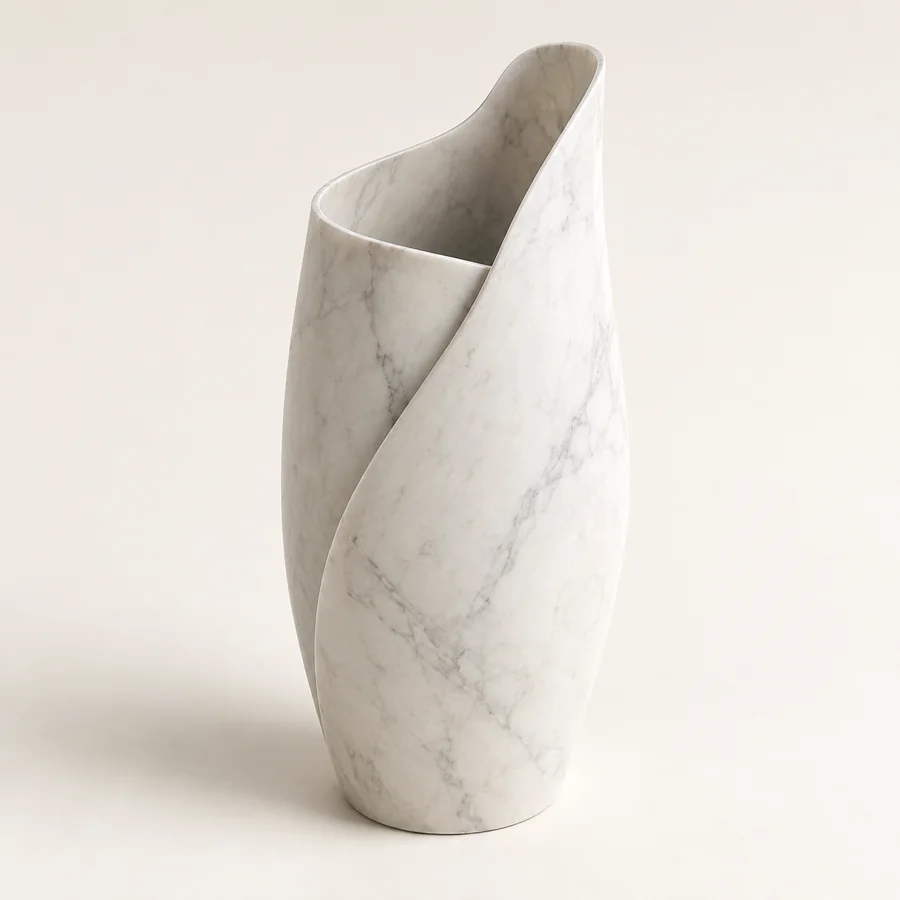
Compare different treatments around a vase opening
The petal-mouth marble vase flares into four lip sections. The square-collar vase introduces a broad geometric projection. Compare their measured openings and outlines with the three-ring bottle neck to choose the detail for your dry-stem display.
Reviews
There are no reviews yet.