
Description
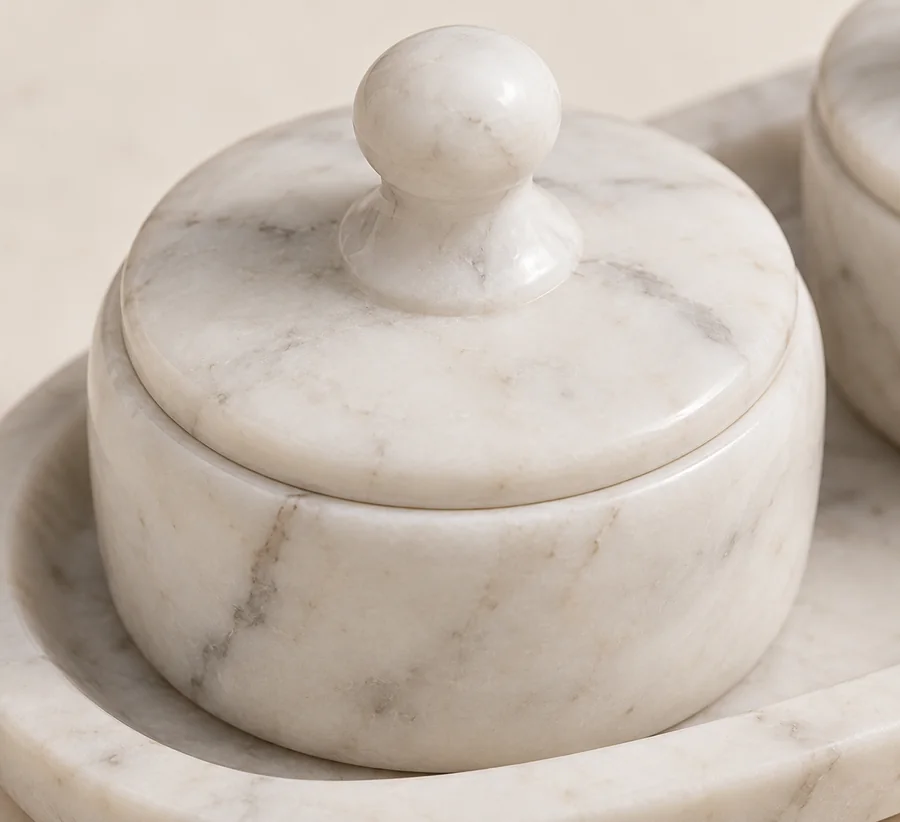
A covered container pair on an oval tray
The marble kumkum container pair proposal brings two small round vessels together on a single oval base. Their covers provide a coordinated top line, with the tray keeping the two positions visually connected.
Agree what each container will hold
The outside planning size is approximately 20 × 12 × 7 cm. Confirm the internal dimensions and cover fit for each vessel, along with any removable liner suitable for the intended contents. Check that both lids can be lifted comfortably within the pooja-shelf arrangement.
Select the white marble and finish before manufacture. Kumkum and other coloured materials should be kept away from unprotected stone; discuss appropriate inserts and cleaning without assuming a stain-proof surface.
Two containers can serve different storage needs
Although the vessels share a similar round outline, their intended contents should be specified separately. Tell the maker what you want to place in each one and how much room you need. A dry powder and a different preparation may require different protection or internal capacity. The design should follow those requirements rather than assume that a matching exterior automatically makes the two interiors suitable for every devotional material.
Ask for the usable diameter and depth of both cavities in the proposal. The outside 20 × 12 cm planning footprint describes the whole arrangement, including the oval base, and cannot be used as a container capacity. Include the space needed to remove any proposed insert. If you have an existing liner you want to use, supply its actual dimensions so its fit can be assessed.
Understand the oval tray around the pair
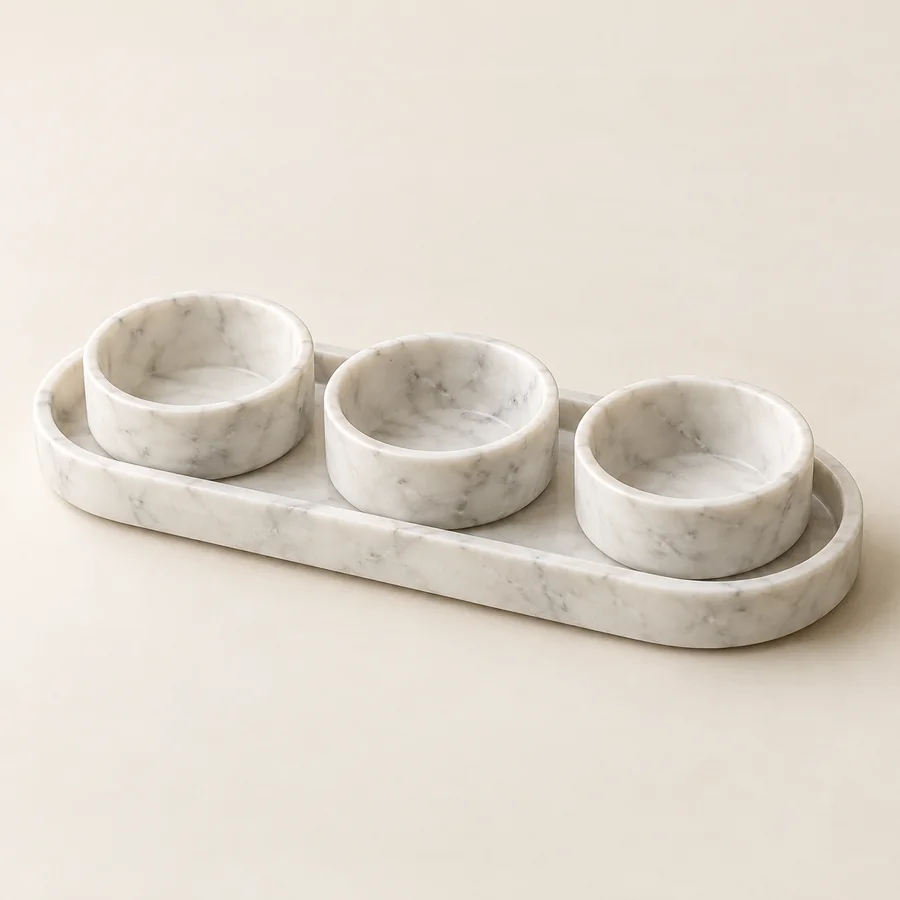
The base visually joins the two covered vessels and leaves a border around them. Consider how much of that border you want to see from the normal viewing position. A narrow border may appear compact, while a wider one occupies more shelf space. The maker should show the position of the containers within the complete oval outline rather than confirm only the total length and width.
Also establish whether the containers will be fixed to the base or supplied as separate pieces. That choice affects cleaning and handling, and the image does not resolve it. If components are removable, ask how their contact areas will be finished and protected. If they are fixed, confirm access around their bases. The proposed arrangement is not evidence of a particular assembly method.
Leave room for the lids in everyday use
A covered pair needs space above the set and beside it. Measure the clearance beneath any shelf and think about where you will place an open lid. Ask how each cover seats on the vessel and whether its edge allows the intended handling. No airtight seal or locking closure is established by this concept, so any specific closure requirement needs to be discussed before production.
Keep the two lids easy to identify if their final dimensions differ. The maker can confirm whether the covers are interchangeable or individually fitted; do not assume either arrangement from the picture. Provide a photograph of the intended pooja shelf if access is restricted. A visually balanced pair should still allow you to reach each container without pushing against neighbouring objects.
Compare other ways to divide a storage area
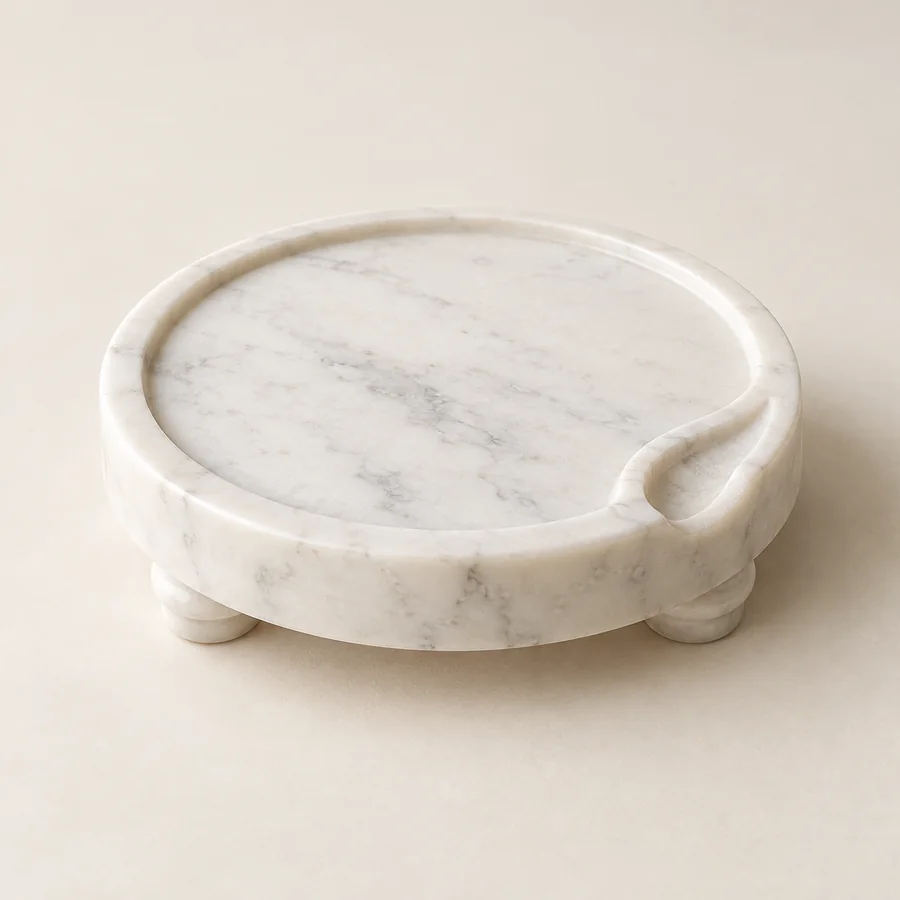
The three-pot tilak storage proposal adds a third covered position on a rectangular base. That may be worth reviewing if you want to separate more materials. The lotus-knob mala storage bowl instead offers a single larger cavity intended for a prayer-bead arrangement. They address different storage tasks and should not be selected solely because the covers look coordinated.
If you plan a group of marble accessories, confirm the material and finish for each piece and leave sufficient gaps for handling. Natural stone markings may differ between components even when they are selected for the same order. The AI-generated illustration is a guide to the proposed outline, not an exact sample of the surfaces that will be delivered.
Plan protection at the rim and base
Kumkum can reach the rim or tray as well as the inside of a vessel. Discuss suitable removable protection and a cleaning routine with the supplier before ordering. General background is available in the Natural Stone Institute care information. Confirm the actual containers, covers, base, inserts, underside protection and maintenance instructions in the quotation so the finished pair is specified for your own storage routine.
Include your preferred cavity sizes through the oval-tray kumkum enquiry. Request a quotation identifying both containers, covers, base, any inserts and making time. AI-generated images show a proposed design rather than a stocked complete set or supplied powders.


Reviews
There are no reviews yet.