
Description
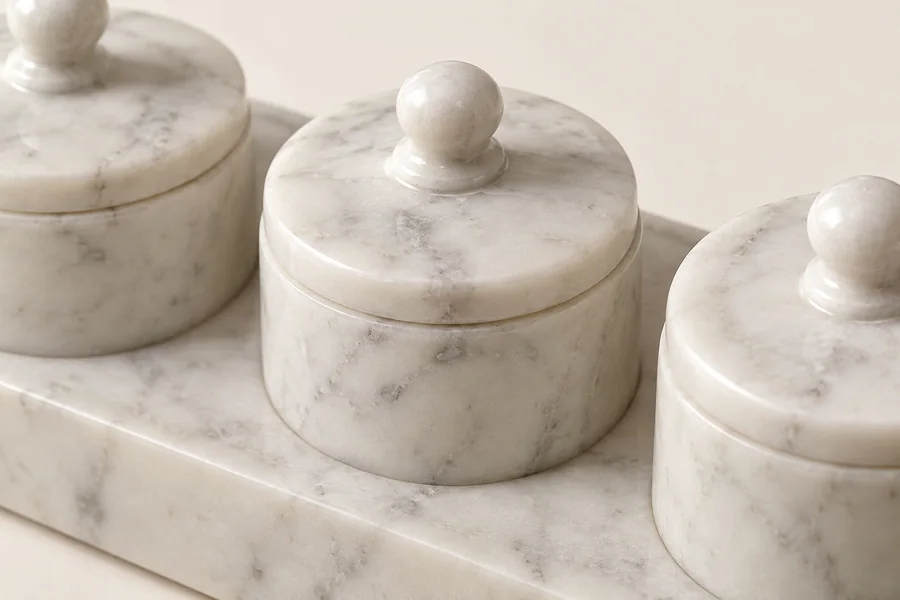
Three covered cylinders along one rectangular base
The marble tilak storage pots proposal keeps three small containers together in a compact row. Individual covers separate the storage positions while the shared base provides one coordinated devotional display.
Specify each cavity and cover
Approximately 22 × 9 × 7 cm is the suggested outside format. Confirm internal diameters and depths, cover fit and space for lifting each lid. If the contents need removable liners, identify those components and their fit before making.
White marble is proposed with the surface finish selected for the intended use. Coloured tilak materials can mark unprotected stone, so agree suitable protection and cleaning with the maker rather than assuming the pictured surfaces are stain-proof.
Give every pot a defined role
Three covered containers can help organise materials only when their intended contents are clear. Decide what you want to keep in each pot and approximately how much room that material needs. Small quantities used frequently may call for different cavity proportions from a display-only arrangement. Share the contents and expected use with the maker before accepting three identical internal dimensions simply because the outside cylinders look alike.
The rectangular base establishes a row, so the spacing between the pots matters. Ask whether your preferred cavity sizes leave enough room for each cover and for your fingers to reach it. The overall 22 cm length does not establish three equal usable sections. A drawing should identify the pot diameters, base margins and gaps rather than divide the outside measurement by three.
Plan for opening one cover at a time
Check the space above the pots and the direction from which you will reach them. A shelf overhead may leave enough room for the closed set but make it difficult to remove a lid. You will also need a place to set each cover while accessing the contents. Consider that everyday movement in the layout rather than planning only for the appearance of the complete closed trio.
Ask the maker how the covers meet the rims and how they should be lifted. The image does not establish airtight seals, hinges or a locking mechanism. Confirm the construction of the lids and the finish on their contact edges. If you need a specific type of closure, describe it as a requirement for review instead of assuming it is included in a decorative covered-pot design.
Protect the stone from coloured materials
Tell the supplier exactly which powders or pastes you intend to store. Their colour, moisture and cleaning needs are relevant to the liner discussion. If removable inserts are proposed, ask for their usable capacity, material and method of removal. The illustration does not establish that inserts are supplied or that the stone interior can be treated as a stain-proof container for every tilak preparation.
Consider the area around each opening as well as the inside cavity. Powder can reach the base when a container is opened or closed, so the gaps need to remain accessible. Ask how the components can be cleaned and whether the pots themselves are fixed to the base or separately removable. The proposed row is a visual arrangement, not confirmation of the final assembly.
Choose the number of storage positions you need
If two covered positions would suit your routine better, compare the oval-tray kumkum container pair. Its base shape and two-vessel arrangement create a different footprint. For contents you want to keep in open bowls, the linear three-bowl pooja tray is another concept to assess. Neither alternative should be assumed to share the same cavity sizes or include the same protection.
Using fewer pieces can leave more room around the accessories you handle most often. Sketch your complete shelf arrangement and mark where the trio would sit relative to vessels, flowers and devotional objects. The base should remain fully supported on a level surface. Confirm its underside contact and any suitable protective pads rather than assuming that the pictured row can stand securely on a narrow or uneven ledge.
Make the final specification easy to check
Request care instructions for the selected marble, finish and any liners. The Natural Stone Institute consumer maintenance guide provides general background. Your written quotation should identify all three pots, their individual cavity sizes, covers, base, removable components and protective materials. Include the intended contents and available shelf clearance so the final proposal addresses storage and access as carefully as its outward appearance.
Send the intended contents and preferred measurements in a tilak-trio quotation request. Confirm the complete set, included inserts, price and production schedule. The images illustrate an AI-generated custom concept, with actual stone grain and final availability settled in the quotation.


Reviews
There are no reviews yet.