
Description
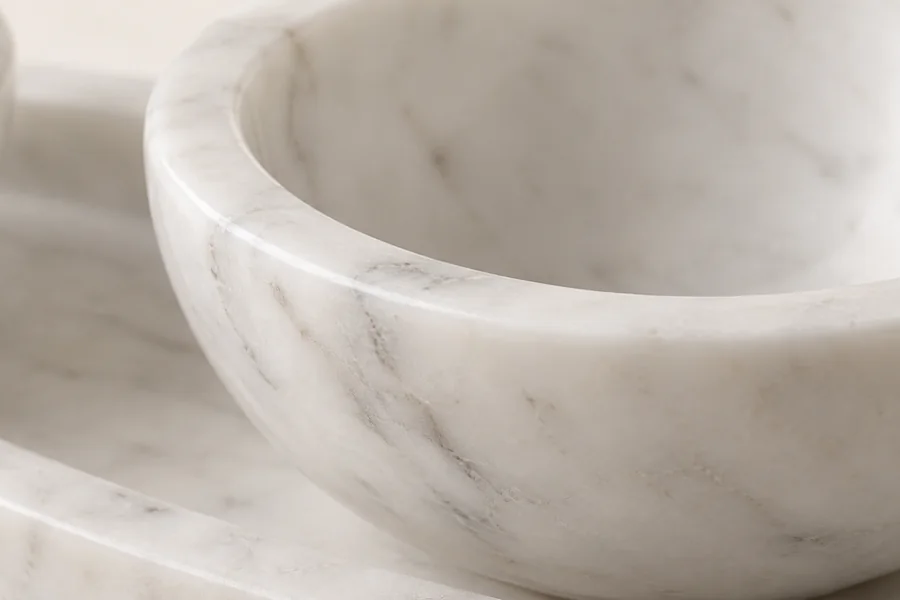
Three bowls arranged along a shallow base
The three bowl marble pooja tray proposal creates a linear display instead of a circular grouping. The small round vessels are positioned along an elongated base, allowing the overall width to be considered against a devotional shelf.
Confirm how the bowls relate to the tray
The suggested planning format is approximately 28 × 12 × 7 cm. Ask for each usable bowl diameter and depth, and confirm whether the finished components will be separate and removable. The illustrated arrangement is not a construction specification.
Describe the intended contents so the maker can review any liners or suitable finish for the selected white marble. Direct flame, hot oil or burning camphor require an expressly agreed arrangement with suitable separate heat-resistant vessels; the stone proposal provides no such rating.
A linear arrangement for a longer shelf
Placing three bowls in a row creates a different footprint from grouping them around a circular plate. Consider whether your available space is wider from side to side or deeper from front to back. The proposed 28 cm length needs to fit fully on the supporting shelf, but it is only one part of the layout. Leave room at both ends so the outer bowls remain accessible.
Think about which direction the row should face. A front-facing arrangement lets you view the three positions together, while a side-on position may make the rear bowl harder to reach. A paper rectangle matching the overall planning dimensions can help compare the options. Mark nearby objects and the movement of your hands rather than judging the fit from an empty shelf alone.
Choose the contents of each bowl separately
List the materials you intend to place in the three positions. Their required quantities and care needs may differ, so equal outside bowls do not necessarily establish equal usable capacity. Ask the maker to specify each internal diameter and depth. If you prefer the bowls to have different cavities while keeping a coordinated appearance, discuss that as a design requirement before approving the dimensions.
The shallow base around the bowls is part of the composition, not an automatic extra storage area. Ask how much border and spacing will remain once the bowls are positioned. If removable inserts are needed for the intended contents, confirm their dimensions, materials and inclusion in the quote. The illustration does not show an approved liquid-tight or food-contact lining.
Where shelf space is shared with a prayer book or another regularly handled object, mark its working area too. The tray should leave that access clear rather than occupy every available centimetre.
Fixed or removable: resolve the construction first
The way the bowls connect with the tray affects daily use. If they are separate, you may need to lift each one for cleaning and return it to an agreed contact area. If the arrangement is fixed, access around and beneath the bowls will be different. The maker should identify the proposed construction explicitly, because the visual style alone does not establish which approach will be supplied.
Also ask whether the complete tray is intended to be moved with contents in place. The image does not provide a handling or load rating. Share the weights and expected use so the supplier can review the design. Confirm how the base should be supported when moved and whether any underside protection is included. Separate removable components, if supplied, need their own handling advice.
Compare an open row with covered storage
The three covered tilak pots retain a linear arrangement while introducing lids and a different storage purpose. The round plate with five shallow seats instead proposes positions for separate vessels around a circular outline. Comparing these layouts can help you choose the number of items and the kind of access that best suit your routine.
Do not assume that bowls or inserts from another design can be transferred to this tray. Each custom proposal needs its own usable dimensions and component list. If you want several accessories in one coordinated order, ask for the material and finish to be reviewed together, but confirm every individual footprint. Matching appearance does not establish matching construction or capacity.
Keep the gaps and rims easy to maintain
The areas between bowls can collect loose particles or residue. Leave enough room to reach those spaces with the cleaning method recommended for the final finish. The Natural Stone Institute maintenance guide offers general background for stone care. Your enquiry should state the contents, expected quantities, preferred orientation and removable-component requirements so the quotation describes a practical three-bowl arrangement for your shelf.
Send your shelf dimensions through the linear pooja-tray enquiry. Confirm included bowls, accessories, final dimensions and price before manufacture. The images are AI-generated illustrations, not photographs of a tested complete ritual set.



Reviews
There are no reviews yet.