
Description
A broad round plate with five shallow seats
The five recess marble aarti tray proposal arranges circular positions around the edge of one broad plate. The layout is a starting point for coordinating separate pooja vessels rather than a guarantee that standard accessories will fit.
Specify the diameter of every intended vessel
Approximately 28 × 28 × 3 cm is the suggested planning size. Confirm the usable diameter and depth of each recess, their spacing and the area left between them. Identify exactly which separate items the tray is expected to accommodate.
The stone design does not establish suitability for direct flame, hot oil or burning camphor. Agree an appropriate arrangement with suitable separate heat-resistant vessels where needed. Select the white marble and finish and keep staining residues away from unprotected stone.
Five positions need five measured decisions
Start by listing the separate vessels you want to arrange on the plate. Their outside diameters, base diameters and heights may all differ. A recess that accepts the bottom of a vessel may still leave its wider upper portion close to the item beside it. Ask for a top-view layout showing the proposed positions with your actual vessel measurements rather than treating all five seats as interchangeable.
Also discuss whether the recesses should be identical or adapted to a particular arrangement. The illustration establishes the idea of five shallow circular seats, but it does not specify their finished diameters or depths. Changes to spacing affect the stone remaining between them and the room at the outside edge. The maker should review the full layout before confirming the overall size.
Decide whether the plate is for display or handling
A static shelf arrangement and an object intended to be lifted during a ritual need different assessment. Explain your intended use clearly, including the complete weight of any separate vessels and contents. The custom design image does not establish suitability for carrying a loaded set or moving heated items. Do not infer handles, grip features or a tested handling method from the outline of the plate.
If the tray will remain in one place, measure the supporting surface and leave room to remove each vessel without disturbing the others. If you want another use, ask the maker to assess it before ordering. The name of the design is not a performance certification. Final construction, vessel compatibility and any heat-related arrangement need to be explicitly agreed for the intended application.
Check the arrangement above the recesses
The spaces between taller accessories matter as much as the circles cut into the stone. Consider access for your hands and whether one vessel obstructs another when viewed from the normal prayer position. A simple plan with both the base circles and the widest upper outlines can reveal crowding. Include any decorative projections when supplying measurements, rather than measuring only the flat contact rings.
Keep the central area in the discussion even though the five seats are arranged near the edge. Ask how much usable space remains and what, if anything, is intended to occupy it. Avoid adding an extra object simply because the centre looks open in the image. The final component layout should be assessed together, including the total footprint, clearances and support beneath the stone.
Compare a circular layout with smaller groups
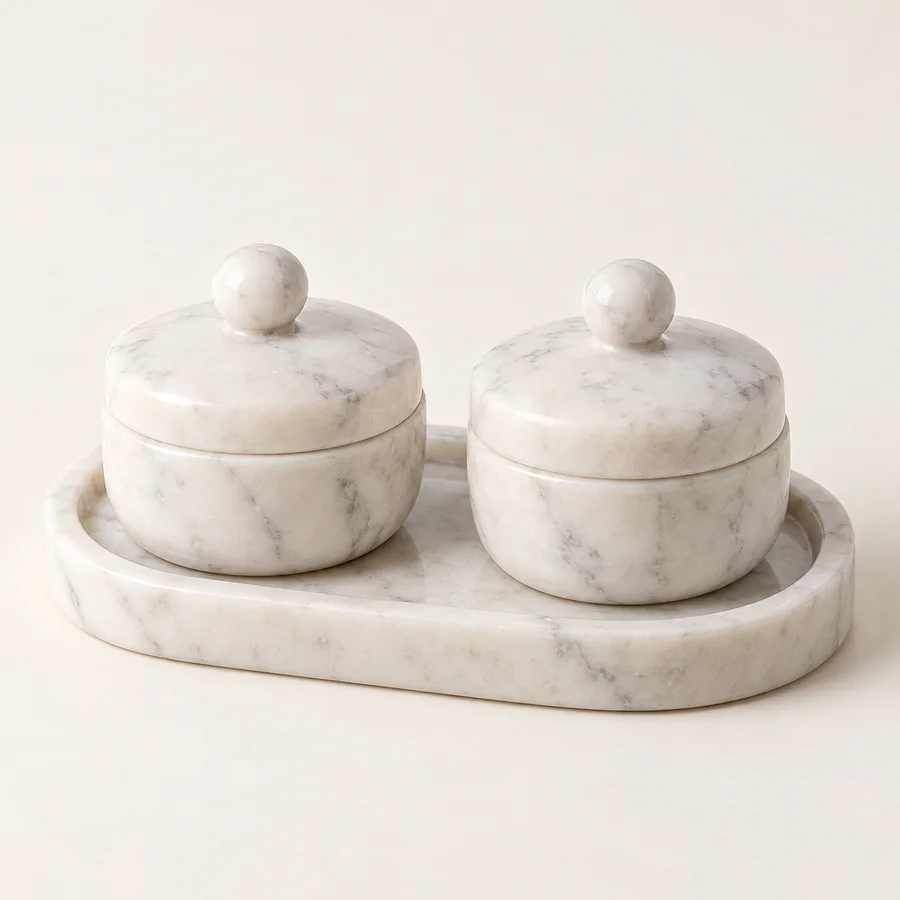
The three-bowl linear pooja tray may be useful to compare when the available shelf is long and narrow. Its arrangement has fewer positions along an elongated base. The covered kumkum container pair instead focuses on two small storage vessels. Reviewing these concepts can help you decide how many separate items you actually need to organise in one stone piece.
These linked products are alternatives with different purposes and dimensions. A coordinated material selection can be requested, but the vessels and inserts included with each design need their own component list. Do not assume that bowls shown in another listing will fit these recesses. Supply the intended accessories or their exact measurements for the maker to assess the proposed seating arrangement.
Keep shallow seats accessible for cleaning
Residue can remain around a vessel base even when the open plate looks clean. Ask about the transition from each recess to the surrounding surface and any suitable removable protection. The Natural Stone Institute stone-care page provides general background. Your final enquiry should identify the five vessels, their contents, intended handling and required protection so the quotation describes a specific arrangement rather than an unspecified complete ritual set.
Include vessel measurements in a five-seat aarti-tray enquiry. Confirm supplied components, final dimensions, price and production timing. The AI-generated illustrations represent a custom tray concept, not a tested complete aarti set or stocked product.


Reviews
There are no reviews yet.